Category: Uncategorized

  • Why Safe Spaces for Faith Questions Matter

    Why Safe Spaces for Faith Questions Matter

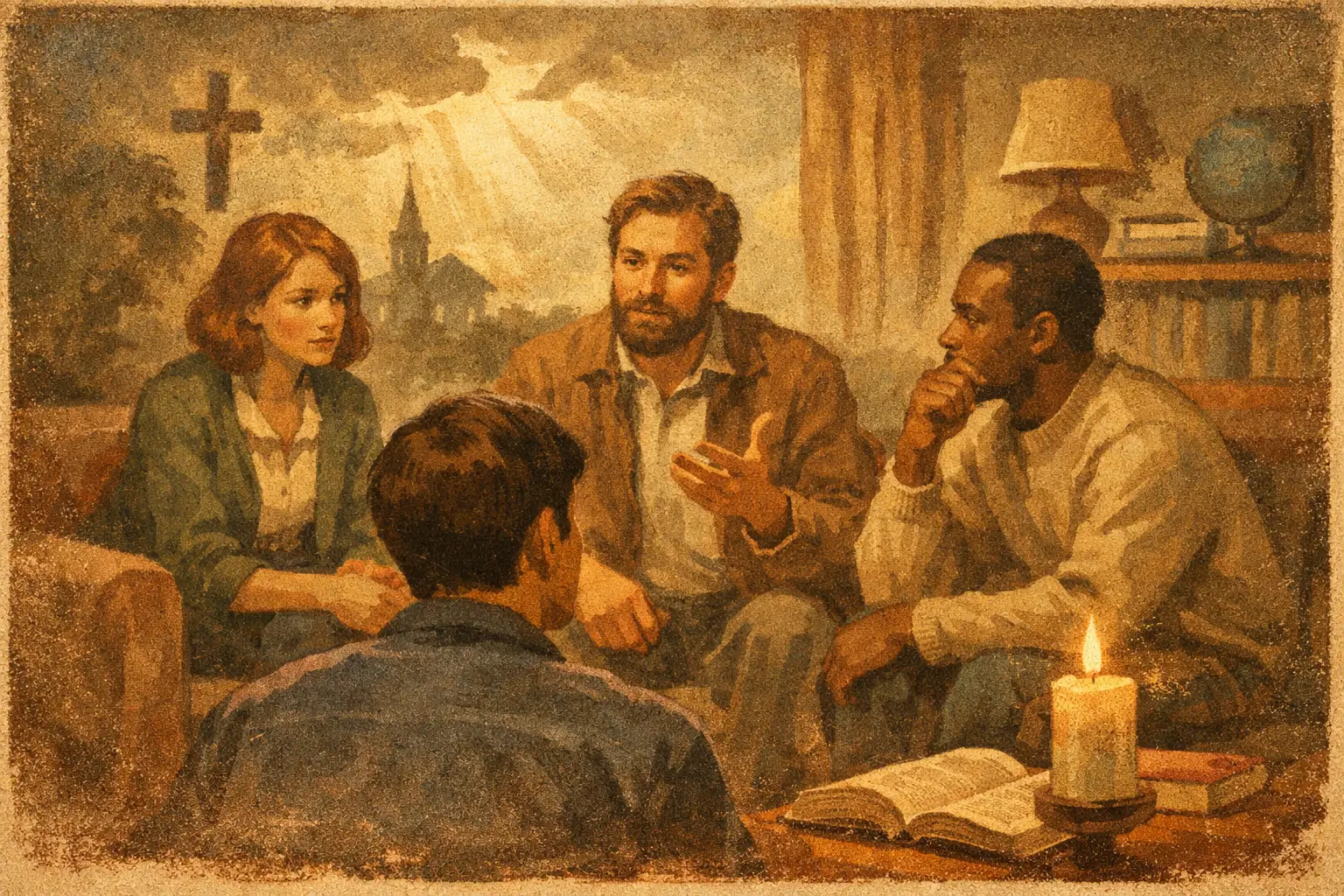
    Some people carry faith questions for years because they have never had a room where asking feels safe. They have sat in services, scrolled through sermons, or tried to read the Bible alone, yet the real questions stayed tucked away. Safe spaces for faith questions matter because honesty rarely grows where people feel watched, rushed, or judged.

    That is true for committed Christians and for people who are only beginning to wonder about God. Some are returning to faith after disappointment. Some are new in town and do not know where to start. Some are curious but wary of being treated like a project. Most are not looking for a perfect answer in five minutes. They are looking for a place where they can speak openly, be treated with respect, and keep showing up.

    What makes safe spaces for faith questions feel different

    A safe space is not a place where anything goes and nothing matters. It is a place where people can bring real questions without fear of embarrassment. That distinction matters. Emotional safety does not mean truth is watered down. It means truth can be explored in a way that is relational, patient, and grounded.

    In practice, that usually looks simple. People listen before they correct. They do not jump in with a polished speech every time someone says, “I’m not sure I believe that,” or “I don’t understand why God would allow this.” There is room for silence. There is room for follow-up. There is also room for, “I don’t know, but let’s keep talking.”

    That kind of environment lowers the pressure for everyone. Mature believers do not need to perform certainty. Newcomers do not need to pretend they understand church language. People who have been hurt by religious settings do not need to brace themselves for another hard-edged exchange. They can just be people in conversation.

    Why so many people struggle to ask faith questions

    The hesitation is rarely about curiosity alone. Often it is about risk. Asking a spiritual question can feel personal in a way other questions do not. It can expose disappointment, confusion, grief, shame, or fear of rejection.

    For some, the barrier is church culture. They may have learned that strong faith looks like quick answers and no hesitation. For others, the barrier is social awkwardness. Walking into an established group where everyone seems to know each other can be harder than it sounds. Even warm people can unintentionally create a closed circle.

    Then there is the pace of modern life. People are tired. They move suburbs, change jobs, care for family, and try to keep up with everything else. Building real community takes consistency, and consistency is often where things fall apart. Good intentions are common. Safe, ongoing spaces are rarer.

    Safe spaces for faith questions are not about having no convictions

    This is one of the most important trade-offs to understand. Some people hear the phrase “safe space” and assume it means avoiding difficult truths. Others assume it means every belief is treated as equally true. Neither one reflects healthy Christian community.

    A genuinely safe space can still have a clear Christian foundation. It can still open the Bible, talk about Jesus with conviction, and welcome thoughtful disagreement or uncertainty. In fact, clarity often helps safety. When people know the setting is faith-centred but not forceful, they are less likely to feel caught off guard.

    It depends on how that clarity is carried. Conviction without humility can feel sharp. Openness without any grounding can feel vague. The healthiest groups tend to hold both – a sincere commitment to Scripture and a sincere respect for the person in front of them.

    What people need in a faith conversation group

    Most people do not need a polished program. They need a few simple conditions that make honest conversation possible.

    They need a group small enough that they can actually speak. In a large room, it is easy to disappear. In a smaller gathering, people are more likely to be known. That matters when questions are tender or half-formed.

    They need consistency. Trust usually does not appear in one meeting. It grows over repeated conversations, shared cups of coffee, awkward first hellos, and the slow realisation that people mean it when they say, “You’re welcome here.”

    They need light structure. Too much structure can make conversation stiff. Too little can leave one person dominating while everyone else stays quiet. A simple discussion prompt, a clear start time, and a shared expectation of respect often go a long way.

    They also need permission to be at different stages. One person may know the Bible well. Another may not know where to begin. A healthy group does not treat that gap as a problem to solve. It treats it as part of real community.

    How to create safe spaces for faith questions

    If you are trying to build this kind of space, the goal is not to impress people. The goal is to make it easier for honesty to happen.

    Start with the welcome. People decide quickly whether they are about to be managed or received. A warm greeting, simple expectations, and a relaxed setting can do more than a highly produced event. Homes, cafés, parks, and online gatherings can all work if the atmosphere is respectful and unforced.

    Set the tone early. It helps to say out loud that questions are welcome, people do not need to have the right words, and no one is expected to pretend. That sounds basic, but many people have never heard it in a Christian setting.

    Listen longer than feels efficient. When someone asks a difficult question, the instinct is often to fix it quickly. But quick answers can miss the real issue. Sometimes the most loving response is another question, gentle curiosity, or a thoughtful pause.

    Keep the Bible open without turning the conversation into a lecture. People are not helped by vague spirituality alone. At the same time, they are not helped by being talked at. Reading a passage together and discussing what stands out often creates a better path than pushing toward a neat conclusion.

    Make room for follow-up. Some questions need more than one conversation. Safety grows when people realise they do not have to resolve everything on the spot. They can come back next week, pick up where they left off, and keep exploring.

    Who benefits from these spaces

    The short answer is almost everyone.

    Long-time Christians benefit because many have questions they never felt free to voice. New believers benefit because they need room to learn without embarrassment. Spiritually curious people benefit because they can explore faith without feeling trapped. People carrying church hurt benefit because gentle consistency can begin to rebuild trust.

    Even confident believers benefit from hearing how others wrestle with Scripture, doubt, and hope. Faith is personal, but it was never meant to be isolated. Honest community strengthens understanding in ways private reflection alone often cannot.

    Why local, relational groups often work best

    There is plenty of good content online, but content is not the same as connection. A podcast can inform you. A sermon can encourage you. Neither one can look you in the eye when you say, “I’m trying to believe, but I’m struggling.”

    That is why local, relational groups matter so much. They create repeated contact. You start recognising names, then stories, then each other’s lives. Over time, a group can become the place where faith questions are not interruptions but part of the journey.

    This is also where a simple matching model can help. Bible Study Connect Group exists to reduce the friction that keeps people from finding that kind of community in the first place. Not everyone has an obvious entry point into a small group. Sometimes the biggest obstacle is not willingness. It is knowing where to go and whether you will be welcomed when you get there.

    A better way to think about spiritual safety

    Spiritual safety is not about protecting people from every hard idea. Christianity makes big claims, and serious questions deserve serious engagement. Spiritual safety is about making sure people can bring their whole selves into the conversation without fear of being shamed for it.

    That means honesty and kindness belong together. It means leaders and hosts do not need to have every answer. It means people can say, “I’m unsure,” and still belong in the room. It means faith is not treated as a performance but as a lived relationship with God that often includes growth, struggle, and grace.

    If you have been looking for a place to ask what you really think, that desire is not a problem to hide. It may be the beginning of deeper faith, stronger community, and a more grounded understanding of who God is. Curiosity is more than enough to start. The right room can make all the difference.


  • How to Join a Local Scripture Circle

    How to Join a Local Scripture Circle

    Some people don’t need more content. They need a few familiar faces, an open Bible, and a place to talk honestly. If you’re hoping to join a local scripture circle, that’s often what you’re really looking for – not a polished program, but a steady space for faith, questions, and connection.

    For a lot of adults, that kind of community is harder to find than it should be. You may have moved suburbs, drifted out of a church small group, or never quite found one that felt natural. You may be strong in faith, or simply curious and willing to show up. Either way, you’re welcome here. A scripture circle doesn’t need to be formal to be meaningful.

    What does it mean to join a local scripture circle?

    At its simplest, a local scripture circle is a small group of people who meet regularly to read Scripture and talk about life with honesty and respect. It might happen in a lounge room, a café, a park, or online. The setting matters less than the spirit of the group.

    The best circles tend to be small enough for everyone to speak and relaxed enough that no one feels they need the right words. That’s especially important if you’ve felt unsure about traditional church structures or if group settings have felt socially awkward in the past. A healthy circle creates room for both confidence and curiosity.

    There’s also a difference between information and fellowship. Plenty of people can listen to sermons, podcasts, or Bible teaching on their own. What many are missing is a consistent place to ask, reflect, disagree gently, and pray with people who begin to know their name and story. That’s where a local scripture circle can matter deeply.

    Who a local scripture circle is for

    You do not need to be a Bible expert to join. You do not need to have the right church background, the right vocabulary, or a perfectly settled faith. In many cases, the people looking for this kind of group include long-time Christians who feel isolated, new residents trying to meet others nearby, shift workers needing something flexible, and people who are exploring Jesus for the first time.

    That mix can actually be a strength. Mature believers often bring steadiness and lived wisdom. Newer or faith-curious participants often bring fresh questions that help everyone slow down and pay attention. The trade-off is that group culture matters. If a circle is too academic, newer people may feel lost. If it is too vague, those wanting spiritual growth may feel undernourished. The healthiest groups tend to balance clarity with warmth.

    How to find the right fit

    If you want to join a local scripture circle, start with realism rather than pressure. Not every group will suit every person, and that’s normal. A good fit usually comes down to three things: proximity, rhythm, and tone.

    Proximity matters because even the most meaningful group can fade if travel becomes a hassle. A circle 10 minutes away is often more sustainable than one across the city, especially after a long workday. Rhythm matters because irregular groups tend to lose momentum. A fortnightly or monthly gathering can work well, but only if people know when to expect it and commit with reasonable consistency.

    Tone may matter most of all. Ask yourself whether you’re looking for a highly structured study, a conversational group, a mixed-level discussion, or something gentle and beginner-friendly. None of these is automatically better. It depends on what helps you stay present and engaged.

    Signs a group may be healthy

    A welcoming scripture circle usually has simple habits that make people feel safe. People introduce themselves properly. Questions are allowed. No one dominates every conversation. Scripture stays central, but the atmosphere stays human. There’s room to laugh, pause, and admit when a passage is hard to understand.

    It also helps when expectations are clear. You should know roughly how often the group meets, how long it runs, and whether prayer, reading aloud, or discussion prompts are part of the gathering. Light structure often works better than no structure at all because it lowers awkwardness without making the meeting feel stiff.

    Signs to pause or look elsewhere

    Some circles are sincere but not suitable for you. If the group feels performative, overly argumentative, or driven by one person’s agenda, it may not be the right place to settle. If newcomers are ignored, or honest questions are brushed aside, that can make connection difficult.

    This doesn’t mean every uncomfortable moment is a red flag. Sometimes people are simply shy at first. But if the overall culture feels closed rather than hospitable, trust that instinct. Spiritual community should make room for truth and grace together.

    What to expect when you join a local scripture circle

    Most people worry about the first meeting more than anything else. That’s understandable. Walking into an unfamiliar room can feel vulnerable, especially when faith is personal.

    In a healthy group, the first gathering should not feel like a test. You might begin with a simple introduction, read a short passage, and talk through a few prompts such as what stands out, what feels challenging, or how the text meets real life. Some circles close in prayer. Others keep that optional until trust grows.

    You don’t need to have all the answers ready. In fact, one of the strengths of a good scripture circle is that people come as they are. Some will speak easily. Others will listen more at first. Both are fine. Belonging usually grows through repetition, not instant chemistry.

    Why small, local circles often work better

    Large events can be encouraging, but they rarely replace the depth of a smaller gathering. In a group of five to eight people, it’s easier to notice when someone’s had a hard week, easier to remember names, and easier to build trust over time.

    Local circles also remove practical friction. If the meeting is nearby, simple to attend, and not over-programmed, people are more likely to keep coming. That consistency is where real community forms. It’s not built in one impressive night. It’s built through ordinary evenings where Scripture is opened and people show up again.

    That’s part of why platforms like Bible Study Connect Group can be helpful. Rather than expecting people to already have the right network, they make it easier to be matched into small, local groups with a manageable format and a clear starting point.

    If you feel nervous, start smaller than you think

    You do not need to become the most outgoing person in the room to take a first step. Sometimes courage looks very ordinary. It looks like replying to a message, turning up once, or admitting you’re not sure what to expect.

    If you’re a committed Christian, joining a local scripture circle may be the nudge you need back into regular fellowship. If you’re spiritually curious, it can be a respectful place to explore without pretending certainty you don’t yet have. The key is finding a group that values people over performance.

    It can also help to set simple expectations for yourself. Aim to attend more than once before deciding whether the group is for you. First meetings are often a little tentative. By the second or third, people are more relaxed and conversation becomes more natural.

    Building a circle that lasts

    The groups that endure are not usually the flashiest. They are the ones that make participation easy enough to repeat. They meet at workable times. They keep discussion grounded. They welcome different personalities. They avoid turning every gathering into a heavy production.

    There is a quiet strength in a circle that stays faithful to simple things – reading Scripture, listening well, praying sincerely, and checking in on one another between meetings. That kind of community can support people through loneliness, transition, doubt, and growth in ways that are deeply practical.

    If you’ve been waiting for the perfect moment, you may not get one. Real community often begins a bit more plainly than that. You find a nearby group, you show up with honesty, and over time strangers become familiar. Sometimes that is where God meets people most gently – not in spectacle, but in a room where curiosity is enough and no one has to carry faith alone.

  • Can Non Christians Join Bible Conversations?

    Can Non Christians Join Bible Conversations?

    If you’ve ever wondered, can non-Christians join Bible conversations, the short answer is yes. Not as a project, not as an outsider in the corner, and not only after agreeing with everyone in the room. In a healthy group, curiosity is more than enough to begin.

    That matters because plenty of people want to talk about faith without stepping straight into a formal church setting. Some are exploring Christianity for the first time. Some grew up around it and have questions they never felt safe asking. Others simply want thoughtful conversation about life, meaning, hope, suffering, forgiveness, or the person of Jesus. A Bible conversation can be a good place for that – if the group knows how to make room for honesty.

    Can non-Christians join Bible conversations in a meaningful way?

    Yes, but the experience depends a lot on the kind of group. Some Bible studies are built for committed Christians who already share the same beliefs, language, and expectations. Those spaces can still be kind, but they may not feel easy for someone who is unsure what they believe.

    Other groups are more conversational by design. They read a passage, ask simple questions, and let people respond from where they actually are. That kind of setting tends to work better for non-Christians because it doesn’t assume everyone has the same background. It creates room for genuine discussion instead of pressure to perform.

    A meaningful Bible conversation is not about pretending differences don’t exist. It’s about being clear that people can participate before everything is settled. Christians in the group can speak from conviction. Non-Christians can speak from curiosity. Both can listen well. That combination often leads to richer conversations, not weaker ones.

    What makes a Bible conversation feel safe for non-Christians?

    Usually, it comes down to posture more than format. A group can meet in a home, a café, a park, or online and still feel welcoming if the tone is respectful. It can also meet in a very polished setting and still feel closed off if every question is treated like a problem to fix.

    People tend to feel safe when expectations are simple. You don’t need to know the Bible already. You don’t need the right words. You don’t need to agree with every Christian belief before showing up. You can ask what a passage means, say when something confuses you, and be honest if you’re unsure what to make of Jesus.

    Safety also grows when group members avoid jargon. Words that feel normal to longtime Christians can be confusing for everyone else. A good conversation doesn’t make people feel silly for needing things explained. It slows down, gives context, and treats every sincere question with dignity.

    There’s also an important difference between welcome and vagueness. A Christian Bible conversation should still be Christian. The point is not to blur the faith until nobody knows what the group believes. The point is to let people encounter Scripture and Christian community without being cornered. Clear belief and genuine hospitality can sit together.

    Why some non-Christians join Bible conversations in the first place

    Not everyone joins for the same reason. Some people are spiritually curious and want to understand what Christians actually believe beyond headlines, assumptions, or old experiences. Others are carrying grief, loneliness, or a sense that life needs deeper grounding. Some are looking for community first and faith second. Others are quietly searching for both.

    That mix is more common than many people realise. A person may not identify as Christian and still be deeply open to discussing Scripture. They may want to hear how others interpret a passage. They may be drawn to Jesus while still uncertain about church. They may simply want a place where meaningful conversation is normal.

    This is one reason low-pressure groups matter. When the social barrier is lower, people are more likely to come as they are. They don’t need to tidy up their beliefs before joining. They can start with a question, a conversation, and a few familiar faces.

    What non-Christians can expect in a healthy group

    A healthy Bible conversation usually feels more human than formal. There might be a short passage, a few prompts, and some natural back-and-forth. People share what stood out, what challenged them, and what they’re still thinking about. Nobody needs to give a polished answer.

    For non-Christians, that means you should be able to participate without pretending. You may be invited to read, reflect, or respond, but not pressured to pray out loud, lead discussion, or speak as if you already believe. You can contribute honestly. In many cases, your questions will help the whole group notice things they might have rushed past.

    You should also expect difference. Christians in the room may talk about personal faith, prayer, sin, grace, and trust in Jesus in ways that feel unfamiliar. That’s normal. Joining a Bible conversation doesn’t mean the group stops being Christian. It means you’re welcome to hear and engage with it in a respectful setting.

    If a group is healthy, disagreement won’t automatically feel threatening. It may still feel stretching. Some passages are confronting. Some conversations touch real convictions. But there is a big difference between challenge and pressure. Good groups know the difference.

    When it may not be the right fit

    It depends on the person and the group. If someone is looking mainly for debate, a relational Bible conversation may frustrate them. Most groups are not trying to stage arguments or score points. They’re trying to create honest, grounded discussion where people can be known over time.

    Likewise, if a group expects full agreement from the start, it may not be the right place for a non-Christian to explore. That doesn’t make the group bad. It may simply be designed for a different purpose, such as discipleship among established believers.

    For the best experience, it helps when expectations are stated clearly. Is the group open to seekers? Is discussion conversational or more teaching-based? Is there room for questions? Those details can remove awkwardness before it starts.

    Can non-Christians join Bible conversations without feeling like a project?

    They can, and they should. Nobody wants to enter a room wondering whether the people there are interested in them as a person or only as a conversion outcome. Christians do believe faith matters deeply. But that belief should produce compassion, not manipulation.

    When people feel like a project, trust disappears quickly. When they feel respected, real conversation can begin. That means listening without rushing, answering without performing, and caring about the person even if their journey is slow, complicated, or unfinished.

    This kind of environment benefits Christians too. It keeps the group grounded in humility. It reminds everyone that spiritual conversations are not about having the most impressive answer. They are about truth, grace, and the kind of community where people can be honest.

    That’s part of why Bible Study Connect Group exists in the first place – to make space for real-life conversation and consistent fellowship without adding unnecessary pressure or social friction.

    How to know if you’re welcome

    A simple test is this: can you show up with genuine questions and still be treated with warmth? If the answer is yes, that’s a good sign. If you sense that curiosity is welcomed, explanations are clear, and nobody is trying to embarrass you for not knowing much, the group is probably on the right track.

    You do not need to have a Christian label to start reading the Bible with others. You do not need a perfect reason for coming. Sometimes people begin with uncertainty and find friendship first. Sometimes they begin with friendship and slowly become open to faith. Sometimes they come for conversation and discover that Scripture is speaking more personally than they expected.

    There is no single path for everyone. But if you’re asking whether you can come before you believe everything, the answer is often yes. You’re welcome here, and honest curiosity is a valid place to begin.

    A good Bible conversation leaves people with more than information. It leaves them feeling seen, respected, and invited to keep asking the deeper questions.

  • Scripture Discussion Questions for Groups

    Scripture Discussion Questions for Groups

    A good group can stall on a single question. Not because people do not care, but because nobody wants to say the wrong thing first. That is why scripture discussion questions for groups matter so much. The right prompt can turn a quiet room into an honest conversation, especially when people are still getting to know one another.

    If your group meets in a lounge room, a café, a park, or online, the goal is not to sound impressive. It is to help people feel safe enough to speak, reflect, and listen. Some people in the circle may know the Bible well. Others may be opening it for the first time. Good questions make room for both.

    What makes scripture discussion questions for groups work

    The best questions are simple without being shallow. They do not force a polished answer, and they do not assume everyone has the same background, church experience, or confidence. A helpful question gives people a clear starting point while still leaving room for personal reflection.

    In most groups, a mix works better than one style repeated all night. Observation questions help everyone notice what the passage actually says. Meaning questions help the group think about God, people, and the purpose of the text. Application questions help the conversation move into everyday life. If you only ask application questions, the discussion can become vague. If you only ask technical questions, newer people may feel left behind.

    There is also a difference between a question that invites and a question that pressures. “What stands out to you?” feels open. “Why did you fail to live this out?” can feel exposing, especially in a newer group. Trust grows over time. Your questions should respect that.

    A simple way to structure the conversation

    You do not need a heavy format to have a meaningful Bible discussion. In fact, lighter structure is often what helps a group stay consistent. One easy pattern is to move through three stages: notice, reflect, and respond.

    Start by noticing the passage together. Ask what people see, what repeats, who is speaking, and what surprises them. This keeps the conversation grounded in Scripture rather than drifting straight into opinions.

    Then move into reflection. Ask what the passage shows about God, human nature, faith, fear, grace, or obedience. This is often where people begin to connect the text with deeper questions of life and belief.

    Finally, move into response. Ask how the passage challenges, comforts, or guides people this week. Not every person will have a dramatic takeaway, and that is fine. Sometimes the most honest response is, “I am still thinking about it.” That still counts as engagement.

    Scripture discussion questions for groups you can actually use

    The most useful prompts are often the least complicated. These questions work across many passages and group types, from long-time believers to spiritually curious guests.

    Questions to help people notice the passage

    Ask, “What stands out to you first in this passage?” or “Is there a word, phrase, or moment that catches your attention?” These questions lower the pressure because there is not one perfect answer.

    You can also ask, “What do you think is happening here?” or “What do we learn about the setting, the people, or the tension in the story?” If your group includes newcomers, this helps them engage without needing prior Bible knowledge.

    Another useful prompt is, “What surprises you?” People often assume Bible discussion has to sound certain. Surprise creates room for curiosity, and curiosity is more than enough to begin.

    Questions to help people reflect on meaning

    Once the group has looked at the text, ask, “What does this passage show us about God?” That question is simple, but it often opens a rich conversation.

    You might follow with, “What does this reveal about people?” or “Where do you see struggle, hope, fear, trust, or grace in this passage?” These questions help people connect the text with real human experience.

    If the group is ready for a little more depth, ask, “Why do you think this mattered to the original audience?” or “What seems to be the main point here?” Just be aware that not every group needs the same level of detail every week. Sometimes a lighter conversation is what helps people keep showing up.

    Questions to help people respond personally

    Application becomes more natural when it grows out of the passage rather than being forced. Ask, “What feels encouraging here?” or “What feels challenging?” You can then ask, “Is there something in this passage that speaks into your life right now?”

    Another strong prompt is, “What might trust or obedience look like this week because of what we read?” That keeps the discussion grounded and practical without becoming preachy.

    If your group is still new, softer questions can help. “What are you taking away from tonight?” is often better than asking for a big commitment. People open up at different speeds.

    Questions that build connection, not just answers

    A Bible group is not a classroom. People are not just there to complete a study. They are there to be known, to listen, and to explore faith in community. That means some of your best discussion moments will come from questions that connect Scripture to lived experience.

    Ask, “Have you ever felt like the person in this story?” or “Does this passage remind you of something people wrestle with today?” These questions make space for honesty and help the Bible feel less distant.

    You can also ask, “What part of this passage feels hopeful?” or “What part feels difficult to understand or accept?” Not every text lands gently. Sometimes people need permission to admit that a passage is confusing, confronting, or emotionally complex. That kind of honesty often leads to more genuine faith conversation than a quick polished answer ever could.

    Common mistakes when choosing discussion questions

    One common mistake is asking too many questions. If you fire through eight prompts in half an hour, people can feel rushed. Two or three good questions usually lead further than a long list.

    Another mistake is asking questions that are too broad. “What does this passage mean for your whole life?” can feel overwhelming. A narrower question such as “What is one thing this passage invites you to notice this week?” is easier to answer and often more useful.

    It also helps to avoid questions that sound like a test. If people sense they are being measured on biblical knowledge, quieter members will often switch off. A healthy group makes room for confidence and uncertainty in the same conversation.

    Finally, be careful with overly personal questions too early. Vulnerability is good, but timing matters. In a group of five to eight people, trust usually grows through consistency, not pressure.

    How to choose the right questions for your group

    The best scripture discussion questions for groups depend on who is in the room. A group of mature Christians may enjoy more theological depth. A mixed group with faith-curious people may benefit from clearer, gentler prompts. Neither approach is better in itself. It depends on the purpose of the group and the season you are in.

    If your group is new, choose questions that are open and accessible. Focus on what people notice, what they wonder about, and what feels relevant. If your group has been meeting for a while, you can ask more probing questions about discipleship, prayer, forgiveness, habits, and spiritual growth.

    It also helps to pay attention to the passage itself. Narrative passages often work well with questions about characters, tension, and response. Wisdom literature may invite reflection on choices and values. A Gospel story may naturally lead into questions about Jesus, trust, healing, or belonging. You do not need to force the same formula onto every text.

    For groups that want simple support without heavy structure, Bible Study Connect Group exists to make this easier. The aim is not to overcomplicate faith conversation, but to help people meet, belong, and keep showing up.

    A short sample flow for one meeting

    If you want an easy starting point, read the passage aloud and ask three questions. First, “What stands out to you?” Second, “What does this show us about God or people?” Third, “What is one way this connects to your life this week?”

    That is enough for many groups. If the conversation flows, stay with it. If the room is quiet, give people a moment. Silence is not always a problem. Sometimes it is just people thinking.

    You do not need perfect wording to lead a meaningful discussion. You just need questions that are clear, kind, and rooted in the passage. When people feel welcome, heard, and free to be honest, Scripture often does more than we expect. Sometimes one thoughtful question is all it takes to help a group move from awkward small talk into real community.

  • How to Find a Casual Bible Study Near Me

    How to Find a Casual Bible Study Near Me

    Some people type casual bible study near me after moving suburbs, starting over, or realising Sunday alone is not quite enough. Others are simply tired of feeling like community should be easier to find than it actually is. If that is you, you are not behind, and you are not the only one looking for a more relaxed way to talk about faith.

    A casual Bible study is often less about having all the right answers and more about having a real conversation in a place where you can breathe. That matters because plenty of people want spiritual connection, but not everyone feels at home in a formal church programme, a large midweek group, or a setting where they worry they will say the wrong thing.

    What people usually mean by casual bible study near me

    Most people are not looking for less sincerity. They are looking for less pressure. A casual group still takes Scripture seriously, but it usually feels more relational than structured. You might meet in a home, a café, a park, or online. The conversation may follow a simple passage and a few prompts rather than a long teaching session or a detailed workbook.

    For some, casual means beginner-friendly. For others, it means local, flexible, and not locked into a denomination-heavy format. It can also mean a group where you do not need to perform spiritually to belong. You can arrive with questions, a long church background, very little Bible knowledge, or a rough week. You are welcome here.

    Why finding the right group can be harder than it should be

    The challenge is not usually lack of interest. It is friction. People want connection, but they do not always know where to begin. Churches may offer small groups, but not everyone is already connected to a church. Some groups are full, some are too far away, and some meet at times that do not work when life is already busy.

    Then there is the social side. Joining an established group can feel awkward. If everyone already knows each other, it is easy to wonder whether you will fit. If the group is highly structured, faith-curious people may worry they need to know more before they show up. If the group is too loose, it might fade after two meetings.

    That is why the best local studies often have a balance of warmth and light structure. Not rigid. Not vague. Just enough clarity to help people keep turning up and enough openness to let the conversation feel natural.

    What a healthy casual Bible study looks like

    A good group feels welcoming before it feels impressive. You should know where you are going, roughly what to expect, and whether the group is suited to your stage of life or comfort level. That kind of clarity removes a lot of the anxiety that keeps people from taking a first step.

    Healthy groups also make room for different kinds of participants. Mature Christians should not dominate every discussion. Newcomers should not feel like projects. A strong group culture is curious, respectful, and grounded in Scripture without becoming argumentative or performative.

    Consistency matters too. A casual setting works best when it is still dependable. If a group constantly changes time, place, or tone, it can feel hard to trust. Relaxed should not mean disorganised.

    How to search for a casual bible study near me without wasting weeks

    Start with proximity and rhythm. A group ten minutes away that meets fortnightly may be far more sustainable than a brilliant one across town every Tuesday night. When people think about Bible study, they often focus on theology first. In practice, location, timing, and group size can make the difference between attending once and becoming part of a real community.

    Look for language that signals openness. If a group describes itself as conversational, welcoming, peer-led, or suitable for all stages of faith, that is often a good sign. If every description feels highly formal, curriculum-heavy, or tailored to an existing church network, it may still be excellent, but it may not be what you mean by casual.

    It also helps to ask practical questions early. Where do you meet? How many people usually come? Is there a discussion format? Is it okay if I am just exploring faith? These are normal questions, not awkward ones.

    If you are using a matching platform rather than trying to join a long-established group, that can remove a lot of the guesswork. Bible Study Connect Group, for example, is built around helping people find small local groups with simple structure and real-life conversation, which can be especially helpful if you are not already in a church small-group system.

    Questions to ask before you join

    You do not need an interview checklist, but a little clarity goes a long way. Ask whether the group is mixed or targeted to a particular life stage. Find out how often they meet and whether people are expected to prepare anything beforehand. Some people love reading a passage on the spot. Others prefer to know the topic in advance.

    You might also want to ask how prayer works in the group. In some gatherings, prayer is very natural and shared. In others, one person closes at the end. Neither approach is automatically better, but it helps to know what will help you feel at ease.

    If you are faith-curious rather than committed, it is worth checking whether questions are genuinely welcome. A healthy Christian group should not be threatened by honest curiosity. It should be able to hold conviction and kindness at the same time.

    What to expect at your first gathering

    Usually, less than you fear and more than you expect. Most casual studies begin with a simple hello, a cuppa, and a few minutes of ordinary conversation. Then someone introduces the passage or prompt, people share what stood out, and the discussion unfolds from there.

    You should not need polished answers. In fact, the best discussions are often shaped by honest observations and lived experience. Someone may connect a verse to grief, parenting, work stress, or a decision they are trying to make. Scripture lands differently when it is allowed to meet real life.

    There may be moments of silence. That is normal. There may also be a few people who talk more than others, especially early on. Group chemistry takes time. If the overall posture is warm, safe, and sincere, one imperfect first meeting does not necessarily mean the group is a bad fit.

    Casual does not mean shallow

    This part matters. Some people hear casual and assume watered-down. But a relaxed environment can actually support deeper honesty. People often speak more openly when they are not trying to keep up appearances.

    A small group in a lounge room or café can hold serious conversations about Scripture, suffering, forgiveness, doubt, prayer, and purpose. The difference is that those conversations happen person to person, not from a stage. There is less polish, but often more reality.

    That said, it depends on the group. If there is no shared commitment to meeting, listening, or staying grounded in the Bible, casual can drift into inconsistency. The goal is not to remove substance. It is to remove unnecessary barriers.

    If you feel nervous, that is normal

    A lot of people searching for a casual bible study near me are not just looking for information. They are looking for courage. It can feel vulnerable to walk into a room where you know no one, especially if faith has been complicated for you or if you have felt overlooked in other Christian spaces.

    Try not to put pressure on the first meeting to answer every question. You are simply noticing whether the space feels safe enough to return. Can you be yourself here? Do people listen well? Is the Bible opened with humility? Is there room for both conviction and grace?

    You do not need to arrive impressive. Curiosity is more than enough.

    When to keep looking

    Not every group will be the right fit, and that is okay. If a gathering feels cliquey, overly intense, unclear in its beliefs, or dismissive of honest questions, you are allowed to keep looking. The same goes if the logistics make regular attendance unrealistic.

    Finding community sometimes takes a little patience. That does not mean you are asking for too much. Wanting a group that is local, welcoming, biblically grounded, and sustainable is reasonable. Those things are not luxuries. They are often what help a group last.

    A casual Bible study can become one of the most steady parts of your week – not because it is flashy, but because people keep showing up with openness, prayer, and a willingness to walk through Scripture together. If you are searching for that kind of space, keep going. The right group often feels less like joining an event and more like finally exhaling.