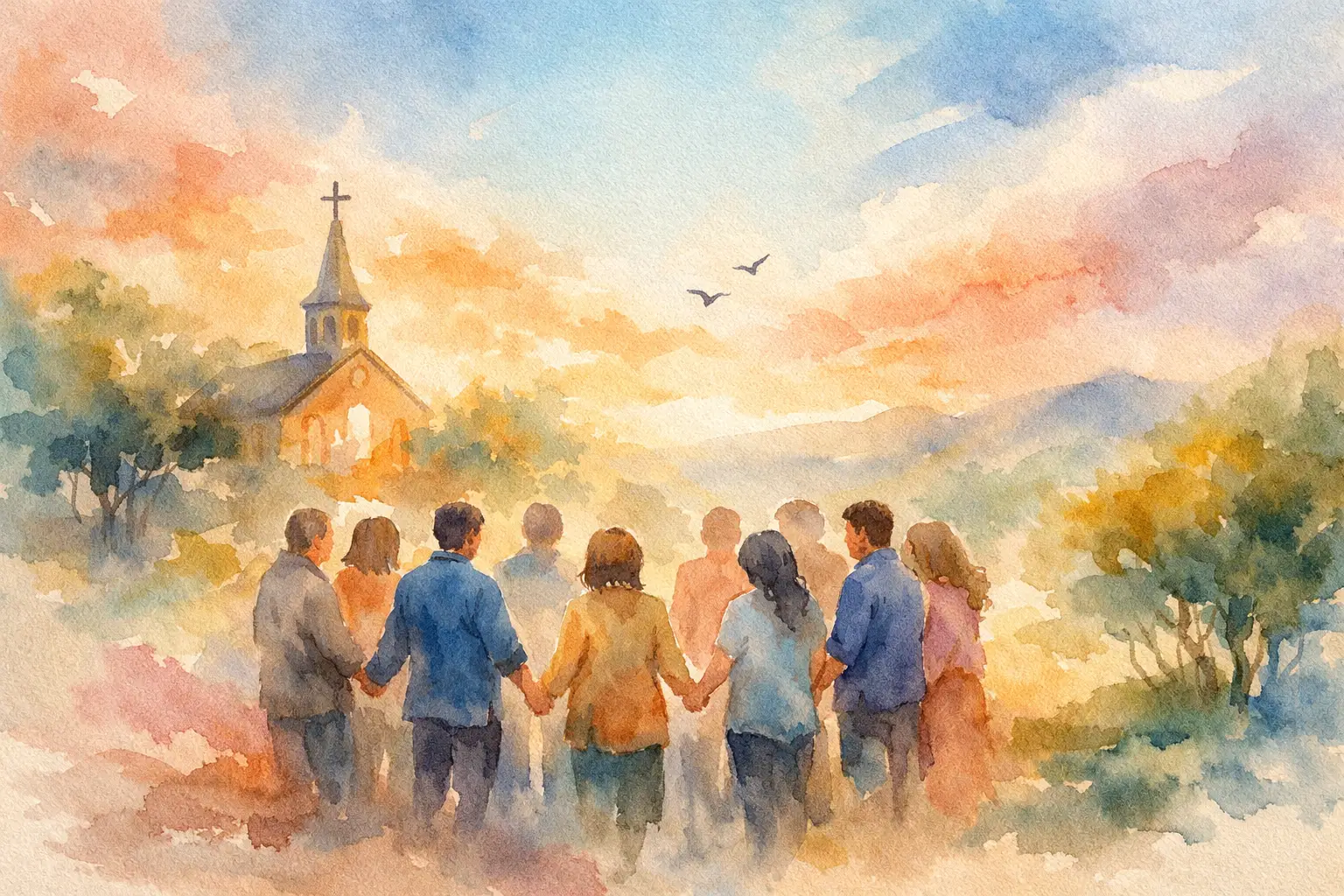
Some people have no trouble walking into a church hall and joining a small group on the spot. Many others do. They want faith-based community groups, but not the awkward first step, the pressure to perform, or the feeling that everyone else already knows each other.
That gap matters more than it might seem. Plenty of adults want real spiritual conversation, local friendships, and a place to ask honest questions about life and Scripture. What often stops them is not lack of interest. It is friction. Too many moving parts, too much uncertainty, and too little sense of emotional safety.
For people who have moved suburbs, changed life stages, drifted from church, or never quite found their place in one, community can feel strangely hard to build. Even committed Christians can end up doing faith mostly on their own. And for someone who is curious about Jesus but unsure about church culture, the barrier can feel even higher.
What faith-based community groups actually offer
At their best, faith-based community groups are not programs to complete. They are places to belong. The strongest groups create room for prayer, Bible discussion, encouragement, and ordinary conversation about work, family, stress, hope, and the kind of questions people do not usually raise in public.
That matters because spiritual growth rarely happens in isolation. People do not just need information. They need consistency, familiarity, and the chance to be known over time. A healthy group gives that shape to faith without making every gathering feel formal.
The setting matters too. Not everyone connects best in a lecture-style room or a structured course. Sometimes a lounge room, a café, a park, or an online catch-up makes it easier to speak honestly. Relaxed settings often lower the social pressure and make room for more genuine conversation.
Why people are looking beyond traditional church small groups
This is not about criticising churches. Many churches run thoughtful, caring small groups that serve people well. But it is also true that traditional systems do not fit everyone equally.
Some people work odd hours or travel often. Some are new in town and know no one. Some feel nervous about entering a group where relationships were formed years ago. Some have had difficult church experiences and want to reconnect with faith carefully, without feeling watched or assessed. Others are interested in spiritual conversation but are not ready to step into a full church environment.
That is where faith-based community groups can meet a real need. They can offer a gentler on-ramp into Christian community – one that feels relational rather than institutional. For many people, that difference is not small. It is the difference between staying isolated and finally showing up.
The difference between helpful structure and too much pressure
One reason groups struggle is that they often land at one of two extremes. They become so loose that no one knows when to meet or what to discuss, and the group fades after two catch-ups. Or they become so structured that people feel they are joining a program rather than a conversation.
Healthy groups sit somewhere in the middle. They have enough clarity to be sustainable and enough openness to feel human. A simple discussion prompt, a regular meeting rhythm, and a manageable group size can make all the difference. People are more likely to return when they know what to expect without feeling boxed in.
This is especially important when a group includes both mature Christians and people who are completely new to the Bible. If the tone is too insider-heavy, newcomers feel lost. If everything is flattened to avoid depth, long-time believers may disengage. Good groups do not solve that tension by picking one side. They create a culture where curiosity is welcome and no one has to pretend.
Why small groups of 5 to 8 often work well
There is no perfect number, but smaller groups tend to make conversation easier. In a group of 5 to 8, people can actually speak, listen, and remember each other’s stories. It is large enough to create variety and support, but small enough that no one disappears into the background.
That size also helps with consistency. If one or two people miss a week, the group can still meet naturally. And because people get familiar faster, trust usually builds more quickly.
What people need before they can engage spiritually
Before most people will speak openly about faith, they need to feel safe. Not safe in the sense of agreement on everything, but safe enough to ask, doubt, reflect, and be honest without being embarrassed.
That kind of safety does not happen by accident. It comes from simple, human signals. Being welcomed without fanfare. Not being put on the spot. Having meetings that begin and end when expected. Knowing that questions are treated with respect. Feeling that the room makes space for both conviction and kindness.
For many adults, especially those who have felt lonely or disconnected, this matters as much as the Bible discussion itself. People often return because they felt at ease before they felt confident.
Faith-based community groups work best when they remove friction
A lot of well-meaning ministry efforts assume that if people want community badly enough, they will push through the awkwardness. Sometimes they do. Often they do not.
Removing friction is not about watering anything down. It is about making it easier for people to take a first step and keep taking the next one. That could mean matching people by suburb and availability, keeping the group size manageable, or offering a clear starting point so no one has to organise everything alone.
This is one reason simple matching models are gaining attention. Instead of expecting people to search endlessly for the right group, they are connected with a few local people who are also looking for the same kind of conversation and consistency. That creates momentum. Bible Study Connect Group is built around that idea – helping people meet in small, local groups with enough guidance to keep things natural and sustainable.
Not everyone is looking for the same thing
Even within Christian community, needs vary. A new resident may mainly want local connection. A long-time believer may want steady fellowship after years of stop-start group experiences. Someone exploring faith may simply want a respectful place to ask what the Bible is actually about.
That is why flexibility matters. Some groups will feel more pastoral. Others more conversational. Some will meet in homes, others online or in public spaces. The goal is not to force every person into one mould. It is to help them find a setting where they can genuinely participate.
What makes a group sustainable over time
Excitement can launch a group. Reliability keeps it alive. Most people are not looking for one inspiring night. They are looking for a rhythm they can trust.
Sustainability usually comes from ordinary things done well: regular scheduling, shared expectations, a welcoming tone, and discussion that is simple enough to keep going. Leadership helps, but it does not always need to be heavy. In many cases, light guidance is enough when the group culture is healthy.
It also helps when gatherings are realistic. If every meeting feels like it requires a perfect home, a trained teacher, or a deeply polished study, the burden becomes too high. But if the expectation is honest conversation, a passage of Scripture, and room to pray and reflect together, the group is much more likely to endure.
Why this matters now
Loneliness is not solved by more content. Spiritual curiosity is not answered by more noise. People are looking for places where faith can be discussed in a way that feels grounded, relational, and real.
Faith-based community groups meet that need when they are built around belonging rather than performance. They remind people that Christian community does not have to be complicated to be meaningful. It can begin with a few people, a local meeting place, open Bibles, and enough trust for honest conversation.
If you have been wanting community but hesitating at the edge, that hesitation does not mean something is wrong with you. It may simply mean you need a setting that feels more human, more local, and more welcoming. Sometimes faith grows best not in a crowd, but in a small circle where you are known by name and welcomed as you are.