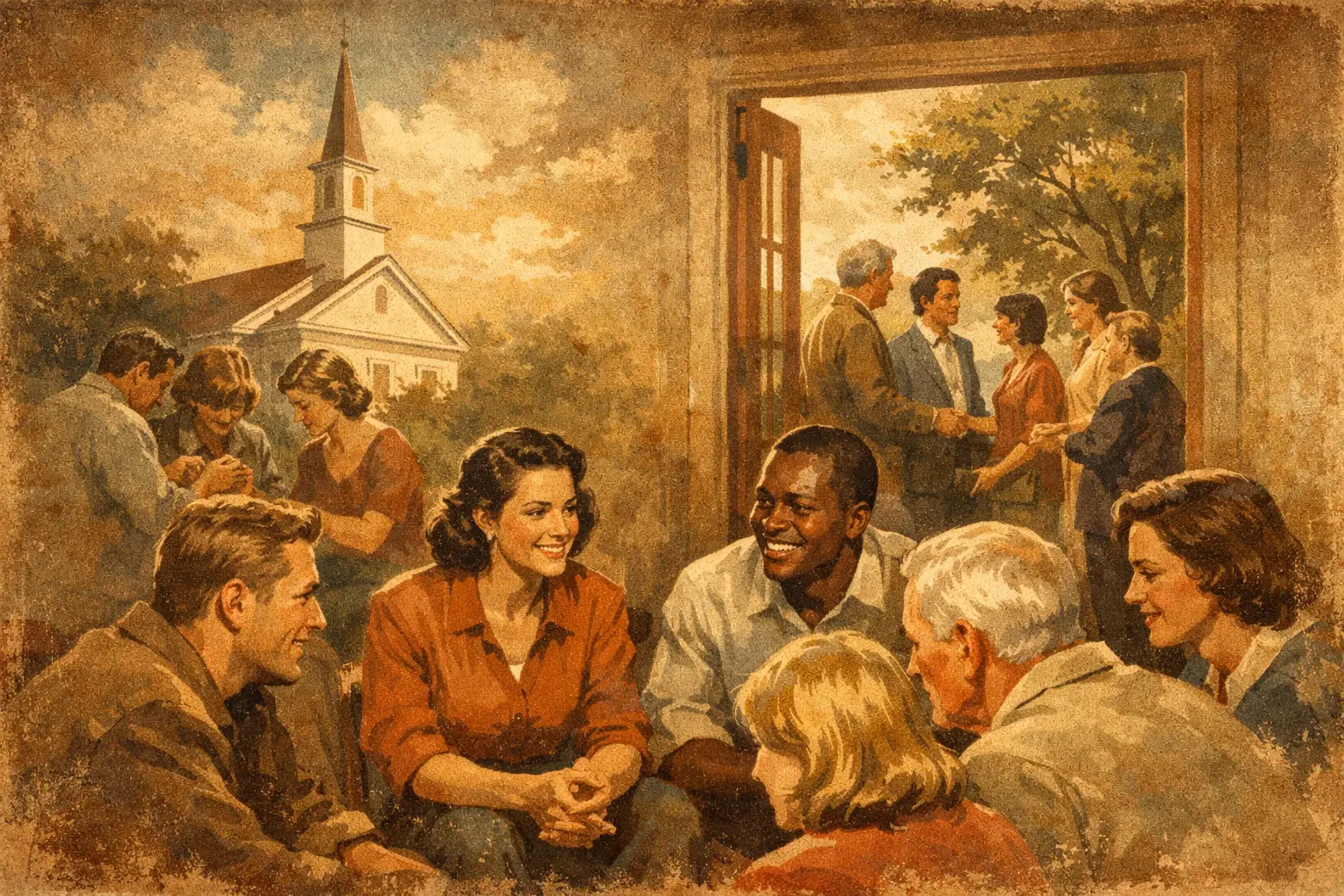
Some people can walk into a room full of strangers and feel at home within minutes. Most of us cannot. If you have been wanting community but keep putting it off because it feels awkward, this guide to local faith connection is for you. Whether you have followed Jesus for years, have just moved suburbs, or are simply curious about faith, the hardest part is often not belief. It is finding people nearby who are open, steady, and easy to talk with.
That gap matters more than many of us admit. A lot of people are not looking for a polished program. They are looking for a place to ask honest questions, open the Bible without pressure, and be known by name. Local faith connection is not about adding one more thing to your calendar. It is about finding a circle where spiritual life becomes more personal, more grounded, and more consistent.
Why local faith connection matters
Faith can be deeply personal, but it was never meant to be isolated. Reading Scripture on your own can be meaningful, yet there is a different kind of encouragement that happens when someone across the table says, “I have wrestled with that too.” That simple moment can shift faith from private effort to shared life.
Local connection matters because proximity changes the kind of relationship you can build. It is easier to keep showing up when the group meets close to home, in a local café, someone’s lounge room, a park, or online with people in your area. Familiar places lower the social pressure. You are not travelling across the city to enter an unfamiliar system. You are stepping into a space that feels possible.
There is also a practical side to this. Good intentions often collapse under logistics. If a group is too far away, too formal, or too hard to join, people drift. A healthy faith community should not feel like solving a puzzle. The simpler the path in, the more likely people are to stay connected long enough for trust to grow.
What people are really looking for
When someone says they want a Bible study group, they do not always mean they want a lesson. Often they mean they want conversation, belonging, and a rhythm they can rely on. They want to know they can arrive as they are, without needing all the right words.
For some, that means finding other Christians who want something more relational than a large church program. For others, it means having room to explore Jesus and Scripture without feeling cornered. These are not the same need, but they can sit alongside each other more naturally than people think when the group culture is warm, respectful, and grounded.
That is why the best local faith spaces are usually not the ones with the most polish. They are the ones with emotional safety. They make room for questions. They do not punish inconsistency. They allow people to be human.
A practical guide to local faith connection
The first step is to get clear on what kind of connection you actually want. If you are hoping for a low-pressure group where discussion matters more than performance, that is different from joining a formal class or a Sunday program. Neither option is wrong, but they serve different purposes. Knowing what helps you feel comfortable will save time and disappointment.
It also helps to think about what would make it easy for you to keep attending. Location matters. Time of day matters. Group size matters. Some people open up best in a group of five or six. Others prefer something slightly larger so the conversation does not rely on them. If you have felt awkward in past church settings, acknowledging that is not a failure of faith. It is useful information.
Once you know your preferences, look for a group structure that removes friction rather than adding to it. Small local gatherings tend to work well because they leave room for real conversation without feeling overwhelming. A little structure helps, especially when people are first meeting, but too much structure can make the whole thing feel stiff. The sweet spot is usually simple: a manageable group size, regular rhythm, a clear meeting place, and a discussion format that lets everyone participate.
If you are joining for the first time, give yourself permission to start small. You do not need to commit to becoming best mates with everyone immediately. Your first goal is simply to find a space where you can breathe. If the tone is welcoming, the conversation feels genuine, and nobody is trying to impress anyone, that is a strong sign.
What a healthy local group feels like
A healthy faith group is usually less flashy than people expect. It feels steady. People listen. Nobody dominates the room. The Bible is opened with sincerity, but there is no sense that you need to pretend you have everything sorted.
You should be able to bring both faith and uncertainty into the same conversation. One person may know Scripture well. Another may be opening it properly for the first time. Both should feel welcome. Curiosity is more than enough to begin.
Consistency matters too. Groups do not need to be perfect to be life-giving, but they do need some reliability. If meetings are always changing, nobody knows what to expect, or the group only survives on one person’s energy, it can be hard to build trust. Sustainable connection usually comes from simple habits that ordinary people can keep.
Common barriers and what to do with them
Loneliness often sits beside hesitation. People want connection, but they fear being the outsider, saying the wrong thing, or joining a group that already feels closed. Those fears are common, and they are not solved by telling yourself to be more confident.
A better approach is to choose environments designed to be easy to enter. Small peer-led groups can help because they tend to feel less institutional and more conversational. Meeting in homes, cafés, or online can also soften the formality. The setting will not fix everything, but it can remove enough pressure for authentic relationships to begin.
Another barrier is spiritual insecurity. Some people worry they are not “Christian enough”. Others worry they are too unsure to belong. The truth is that meaningful faith conversation often starts in exactly that place. You do not need a polished testimony or years of Bible knowledge to sit with others and ask good questions.
Then there is plain old busyness. Work, family, commuting, and life admin can make community feel like a luxury. This is where local matters again. If connection requires too much travel or too much effort, it becomes easy to postpone. When it is close by and simply organised, it becomes much easier to say yes.
Why simple structure often works best
People sometimes assume that the most effective spiritual community must be highly programmed. Sometimes it is. But often, especially for adults looking for genuine connection, simple structure works better. A short reading, a few thoughtful prompts, and space for honest conversation can go a long way.
This is one reason platforms like Bible Study Connect Group resonate with people who do not fit neatly into existing church small-group systems. The value is not in creating a heavy framework. It is in making it easier for people to meet locally, form a group that fits real life, and keep showing up in a way that feels natural.
There are trade-offs, of course. Less structure can mean groups depend more on the maturity and goodwill of the people involved. Not every group will have the same depth or pace. But for many people, that flexibility is exactly what allows the group to remain warm, accessible, and sustainable.
If you are still unsure, start with one honest yes
You do not need to solve your whole spiritual future this week. You only need one honest yes. Yes to meeting a few people nearby. Yes to a conversation about faith and life. Yes to letting community be a little more local and a little less complicated.
The right group will not ask you to perform. It will give you room to arrive, listen, speak when you are ready, and return next time without fuss. That kind of connection can become a quiet anchor in ordinary life.
If you have been hoping for a place where faith feels relational rather than formal, nearby rather than distant, and welcoming rather than pressured, trust that this is a good hope. Start where you are, with the openness you have, and let local connection grow one conversation at a time.