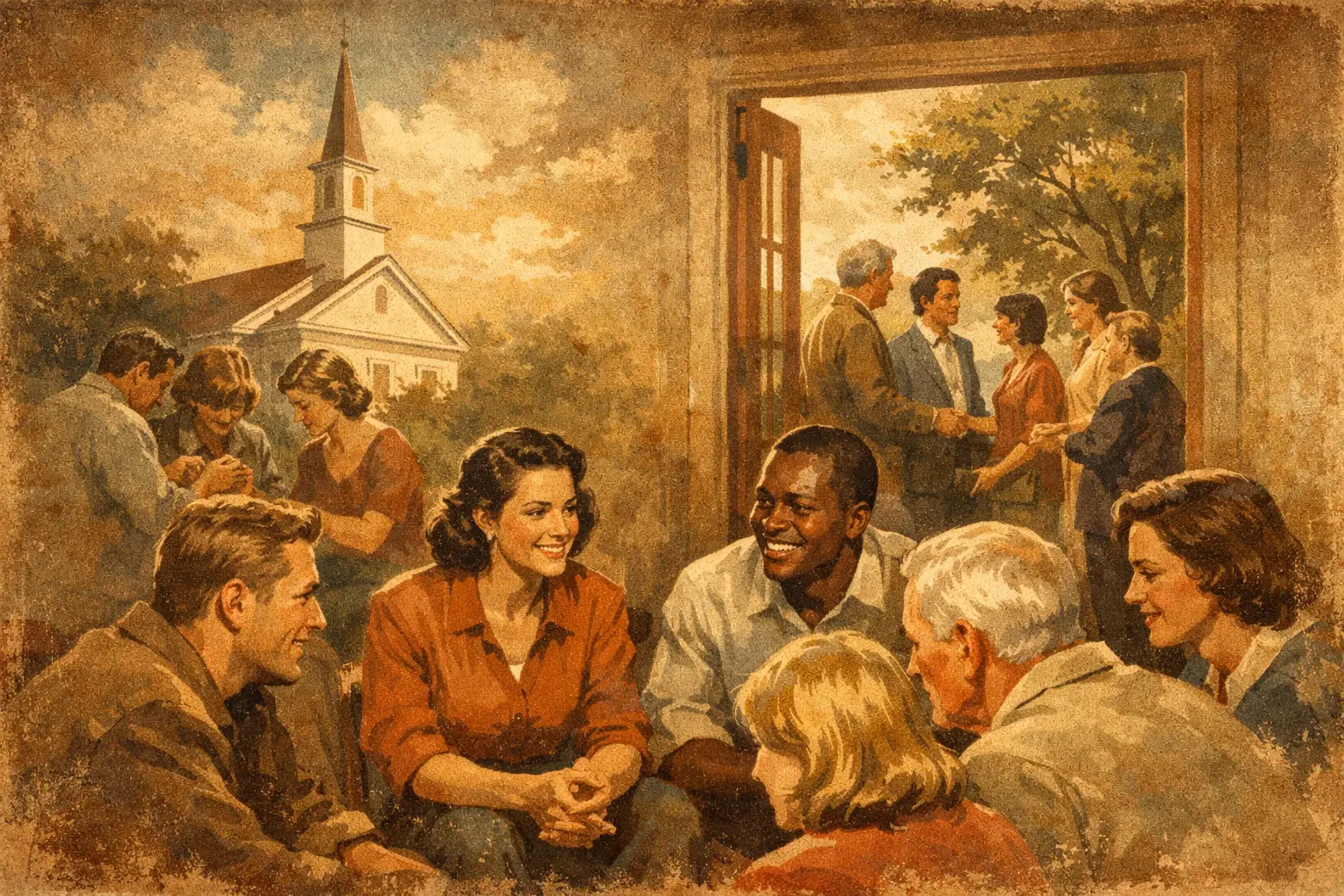
Some people don’t stop showing up to faith because they’ve lost every belief. Often, they’re just tired of trying to find community that feels genuine, workable, and steady. Consistent Christian fellowship matters because faith is rarely sustained by good intentions alone. It is strengthened in ordinary, repeated moments with people who know your name, notice when you’re missing, and are willing to talk honestly about life and Scripture.
That kind of connection can be harder to find than it should be. Schedules clash. Established groups can feel closed without meaning to. Walking into a new room on your own can feel awkward, even if you’ve been a Christian for years. If you’re new to faith, new to town, or simply out of rhythm, the gap between wanting community and actually finding it can feel surprisingly wide.
What consistent Christian fellowship really means
When people hear the word fellowship, they sometimes picture something formal or overly polished. But consistent Christian fellowship is much simpler than that. It means meeting with other people around a shared openness to Jesus, Scripture, prayer, and honest conversation, then doing that regularly enough for trust to grow.
Consistency is the part many people miss. A one-off gathering can be encouraging, but it usually doesn’t create the kind of safety where people can speak truthfully about grief, doubt, marriage, loneliness, work pressure, or unanswered prayer. Repeated connection changes that. Over time, small talk gives way to real life.
Christian fellowship is also more than socialising with nice people who happen to be believers. Friendship matters, of course, but biblical community includes mutual encouragement, gentle honesty, prayer, and space to grow. It is relational, not performative. You do not need to sound impressive or have all the right language. You just need a willingness to show up.
Why consistency changes the experience
There is a real difference between occasional inspiration and ongoing support. Most people can get through a single week on a podcast, a sermon, or a burst of motivation. It’s much harder to keep going through a hard season without real people nearby.
Consistent Christian fellowship creates a rhythm that steadies faith. You start to build shared context. People remember what you said last week. They ask how the job interview went, whether your mum’s health improved, or how you’re feeling after a difficult breakup. That continuity helps people feel seen, and feeling seen often opens the door to spiritual honesty.
It also helps with growth in ways that are easy to overlook. Regular conversation around Scripture gives people time to wrestle, question, and reflect without pressure. One person may bring a mature understanding of a passage. Another may ask the simple question everyone else was afraid to ask. Both are valuable. In a healthy group, learning becomes communal rather than competitive.
That said, consistency does not mean intensity. Not every group needs a packed agenda or a three-hour meeting. In fact, when gatherings become too heavy or too complicated, they often become harder to sustain. A simple, dependable rhythm is usually better than an ambitious one that falls apart after a month.
The real barriers to consistent Christian fellowship
Loneliness is common, but that doesn’t mean community is easy. Many people want fellowship and still struggle to step into it. Sometimes the barrier is practical. Work hours are messy, kids’ routines are full-on, and travel across a city after dark can feel like too much. Sometimes the barrier is emotional. People worry they’ll be the outsider, the least knowledgeable person in the room, or the one who doesn’t quite fit.
Church-based groups can be deeply meaningful, but they are not accessible for everyone in every season. If you’re new in town, between churches, working unusual hours, or feeling hesitant about formal settings, finding your place can take longer than expected. Even committed Christians can drift into isolation when the process of joining community feels socially and logistically hard.
Then there are people who are spiritually curious but unsure whether they belong anywhere Christian at all. They may want to ask real questions about God, purpose, or the Bible, yet feel wary of entering spaces where they assume they’ll be judged or pushed too quickly. A low-pressure setting makes a difference here. Curiosity is often the beginning of deeper faith, not a problem to be fixed.
What healthy fellowship looks like in practice
Healthy community is rarely flashy. It usually looks like a small group of people meeting in a lounge room, a café, a park, or online, opening the Bible, asking thoughtful questions, and making room for each person to speak.
The strongest groups tend to share a few qualities. They are welcoming without being vague, grounded in Christian faith without becoming rigid, and structured enough to keep moving without feeling controlled. People know roughly what to expect, but they don’t feel managed.
This matters because sustainability often depends on simplicity. If every gathering requires a highly gifted leader, a perfect host, and a polished plan, most groups won’t last. But if the format is light and clear, ordinary people can keep showing up and participating. That is where genuine fellowship has room to grow.
It also helps when the group size stays small enough for conversation. In groups of five to eight, people can contribute without disappearing into the background. There is enough variety for different personalities, but still enough intimacy for trust to form over time.
Consistent Christian fellowship for different seasons of life
Not everyone is looking for the same thing, and that’s worth saying plainly. A mature believer coming out of a long season in church may want peers who can pray deeply and speak candidly about discipleship. A newcomer to Christianity may just want a safe place to read the Bible and ask what it means. Someone returning after disappointment may need gentleness more than advice.
Consistent Christian fellowship can hold all of that, but only if the environment is relational rather than performative. People should not feel they need to prove their spiritual credentials before they belong. In a healthy setting, belonging often comes first, and growth follows.
This is one reason relaxed, local gatherings can help. They remove some of the friction that keeps people on the edge. Instead of waiting until you feel fully ready, you can simply meet a few people, have a real conversation, and return the following week or fortnight. That rhythm can be quietly transformative.
For people who have been isolated for a while, the first step may still feel vulnerable. That’s normal. Trust usually grows slowly, and good groups respect that. No one should be pushed to share more than they want to. But staying hidden forever rarely brings the connection people are actually hoping for.
How to build a rhythm that lasts
If you’re looking for consistent Christian fellowship, it helps to think less about finding the perfect group and more about finding a sustainable rhythm. Perfect chemistry is nice when it happens, but regularity, warmth, and shared sincerity matter more in the long run.
Start with something realistic. A weekly or fortnightly meet-up that people can actually attend is often better than a grand plan that keeps getting cancelled. Keep the structure light. Read a passage, ask a few honest questions, leave room for prayer, and let conversation be human. If the group meets in homes, cafés, or online, choose whatever removes the most friction for the people involved.
It also helps to set the tone early. Let people know they are welcome here, even if they are unsure, rebuilding, or still figuring out what they believe. Make it clear that listening is valued as much as speaking. The aim is not to impress each other. It is to meet with openness before God and one another.
This is part of why Bible Study Connect Group exists. Not to replace churches or create a polished programme, but to make it easier for people to find real, local, repeatable connection around Scripture and conversation. For many people, the main obstacle is not desire. It is friction. When that friction is lowered, fellowship becomes much more possible.
When fellowship feels disappointing
It would be unrealistic to pretend every group experience will be perfect. Sometimes personalities don’t click. Sometimes a group starts well and loses momentum. Sometimes the conversation stays shallow longer than you hoped. Those experiences can be discouraging, especially if you took a risk by showing up.
Still, disappointment does not mean community is a bad idea. It usually means the shape, pace, or mix of people wasn’t quite right. There is wisdom in giving a group a fair chance, and there is also wisdom in recognising when a different setting may be healthier. Consistency matters, but so does fit.
If you’ve been let down before, it may help to look for groups where hospitality is clear, expectations are simple, and no one is trying to manufacture instant closeness. Real fellowship cannot be forced. It grows through repeated presence, patient listening, and the quiet courage of returning.
You do not need a perfect community to begin. You just need an honest one, and a rhythm steady enough for trust to take root.