Blog

  • Why Faith Based Community Groups Matter

    Why Faith Based Community Groups Matter

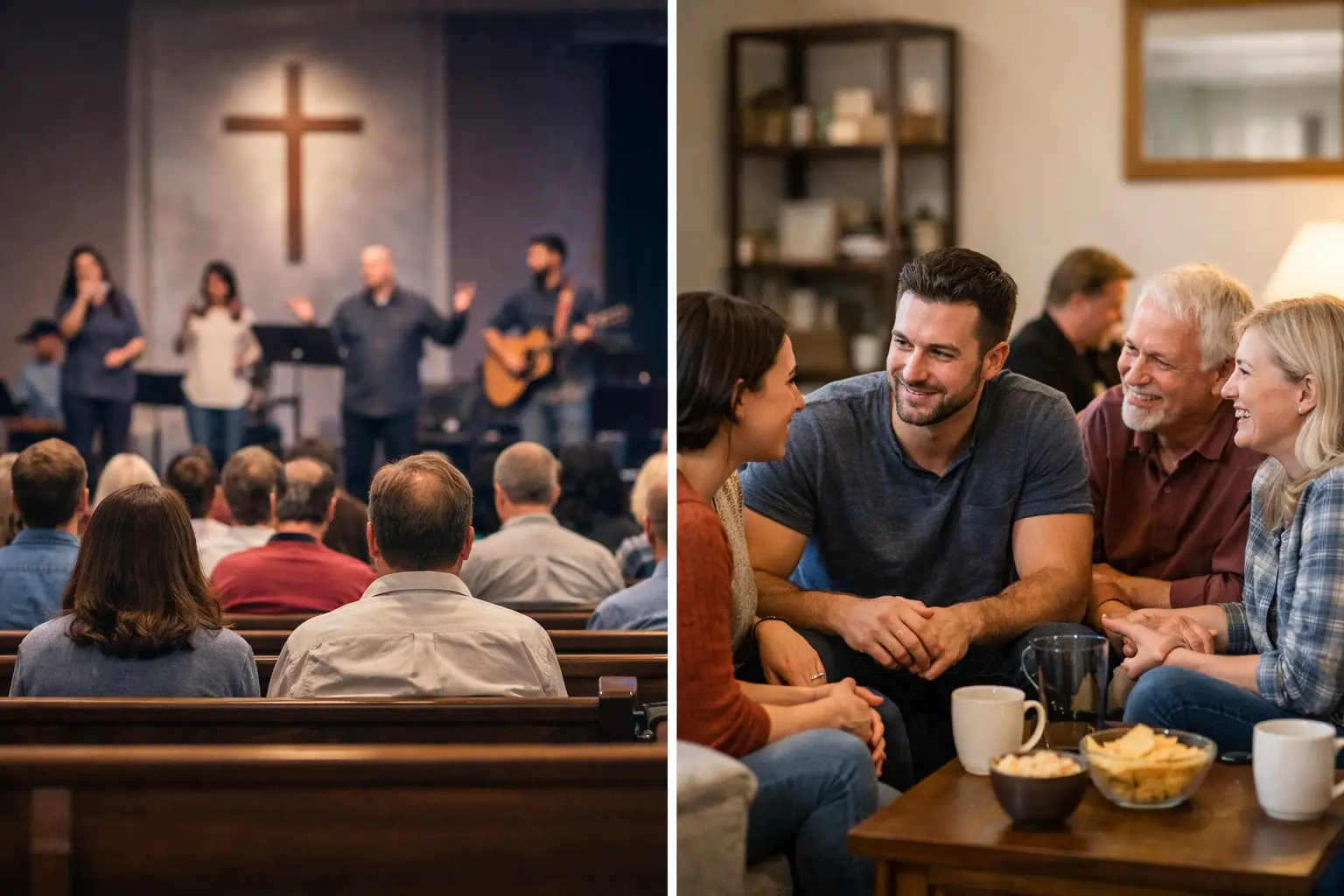
    Some people have no trouble walking into a church hall and joining a small group on the spot. Many others do. They want faith-based community groups, but not the awkward first step, the pressure to perform, or the feeling that everyone else already knows each other.

    That gap matters more than it might seem. Plenty of adults want real spiritual conversation, local friendships, and a place to ask honest questions about life and Scripture. What often stops them is not lack of interest. It is friction. Too many moving parts, too much uncertainty, and too little sense of emotional safety.

    For people who have moved suburbs, changed life stages, drifted from church, or never quite found their place in one, community can feel strangely hard to build. Even committed Christians can end up doing faith mostly on their own. And for someone who is curious about Jesus but unsure about church culture, the barrier can feel even higher.

    What faith-based community groups actually offer

    At their best, faith-based community groups are not programs to complete. They are places to belong. The strongest groups create room for prayer, Bible discussion, encouragement, and ordinary conversation about work, family, stress, hope, and the kind of questions people do not usually raise in public.

    That matters because spiritual growth rarely happens in isolation. People do not just need information. They need consistency, familiarity, and the chance to be known over time. A healthy group gives that shape to faith without making every gathering feel formal.

    The setting matters too. Not everyone connects best in a lecture-style room or a structured course. Sometimes a lounge room, a café, a park, or an online catch-up makes it easier to speak honestly. Relaxed settings often lower the social pressure and make room for more genuine conversation.

    Why people are looking beyond traditional church small groups

    This is not about criticising churches. Many churches run thoughtful, caring small groups that serve people well. But it is also true that traditional systems do not fit everyone equally.

    Some people work odd hours or travel often. Some are new in town and know no one. Some feel nervous about entering a group where relationships were formed years ago. Some have had difficult church experiences and want to reconnect with faith carefully, without feeling watched or assessed. Others are interested in spiritual conversation but are not ready to step into a full church environment.

    That is where faith-based community groups can meet a real need. They can offer a gentler on-ramp into Christian community – one that feels relational rather than institutional. For many people, that difference is not small. It is the difference between staying isolated and finally showing up.

    The difference between helpful structure and too much pressure

    One reason groups struggle is that they often land at one of two extremes. They become so loose that no one knows when to meet or what to discuss, and the group fades after two catch-ups. Or they become so structured that people feel they are joining a program rather than a conversation.

    Healthy groups sit somewhere in the middle. They have enough clarity to be sustainable and enough openness to feel human. A simple discussion prompt, a regular meeting rhythm, and a manageable group size can make all the difference. People are more likely to return when they know what to expect without feeling boxed in.

    This is especially important when a group includes both mature Christians and people who are completely new to the Bible. If the tone is too insider-heavy, newcomers feel lost. If everything is flattened to avoid depth, long-time believers may disengage. Good groups do not solve that tension by picking one side. They create a culture where curiosity is welcome and no one has to pretend.

    Why small groups of 5 to 8 often work well

    There is no perfect number, but smaller groups tend to make conversation easier. In a group of 5 to 8, people can actually speak, listen, and remember each other’s stories. It is large enough to create variety and support, but small enough that no one disappears into the background.

    That size also helps with consistency. If one or two people miss a week, the group can still meet naturally. And because people get familiar faster, trust usually builds more quickly.

    What people need before they can engage spiritually

    Before most people will speak openly about faith, they need to feel safe. Not safe in the sense of agreement on everything, but safe enough to ask, doubt, reflect, and be honest without being embarrassed.

    That kind of safety does not happen by accident. It comes from simple, human signals. Being welcomed without fanfare. Not being put on the spot. Having meetings that begin and end when expected. Knowing that questions are treated with respect. Feeling that the room makes space for both conviction and kindness.

    For many adults, especially those who have felt lonely or disconnected, this matters as much as the Bible discussion itself. People often return because they felt at ease before they felt confident.

    Faith-based community groups work best when they remove friction

    A lot of well-meaning ministry efforts assume that if people want community badly enough, they will push through the awkwardness. Sometimes they do. Often they do not.

    Removing friction is not about watering anything down. It is about making it easier for people to take a first step and keep taking the next one. That could mean matching people by suburb and availability, keeping the group size manageable, or offering a clear starting point so no one has to organise everything alone.

    This is one reason simple matching models are gaining attention. Instead of expecting people to search endlessly for the right group, they are connected with a few local people who are also looking for the same kind of conversation and consistency. That creates momentum. Bible Study Connect Group is built around that idea – helping people meet in small, local groups with enough guidance to keep things natural and sustainable.

    Not everyone is looking for the same thing

    Even within Christian community, needs vary. A new resident may mainly want local connection. A long-time believer may want steady fellowship after years of stop-start group experiences. Someone exploring faith may simply want a respectful place to ask what the Bible is actually about.

    That is why flexibility matters. Some groups will feel more pastoral. Others more conversational. Some will meet in homes, others online or in public spaces. The goal is not to force every person into one mould. It is to help them find a setting where they can genuinely participate.

    What makes a group sustainable over time

    Excitement can launch a group. Reliability keeps it alive. Most people are not looking for one inspiring night. They are looking for a rhythm they can trust.

    Sustainability usually comes from ordinary things done well: regular scheduling, shared expectations, a welcoming tone, and discussion that is simple enough to keep going. Leadership helps, but it does not always need to be heavy. In many cases, light guidance is enough when the group culture is healthy.

    It also helps when gatherings are realistic. If every meeting feels like it requires a perfect home, a trained teacher, or a deeply polished study, the burden becomes too high. But if the expectation is honest conversation, a passage of Scripture, and room to pray and reflect together, the group is much more likely to endure.

    Why this matters now

    Loneliness is not solved by more content. Spiritual curiosity is not answered by more noise. People are looking for places where faith can be discussed in a way that feels grounded, relational, and real.

    Faith-based community groups meet that need when they are built around belonging rather than performance. They remind people that Christian community does not have to be complicated to be meaningful. It can begin with a few people, a local meeting place, open Bibles, and enough trust for honest conversation.

    If you have been wanting community but hesitating at the edge, that hesitation does not mean something is wrong with you. It may simply mean you need a setting that feels more human, more local, and more welcoming. Sometimes faith grows best not in a crowd, but in a small circle where you are known by name and welcomed as you are.

  • How a Bible Discussion Group Feels Safe

    How a Bible Discussion Group Feels Safe

    Some people want to talk about faith but freeze at the thought of walking into a church hall full of strangers. Others have tried group Bible study before and left feeling talked at, overlooked, or quietly out of place. A bible discussion group works differently when it is built around conversation, not performance. It gives people room to ask, listen, reflect, and show up as they are.

    That matters more than it might seem. For many adults, the barrier is not whether they care about God or Scripture. It is whether there is a place where they can speak honestly without feeling judged, rushed, or expected to already know how everything works. A good group lowers that barrier.

    What makes a bible discussion group different?

    The phrase can mean different things in different settings. In some places, it looks like a traditional study with a clear leader, teaching time, and weekly homework. That can be valuable. But for many people, especially those who feel disconnected from formal church structures, a bible discussion group is most helpful when it feels relational and grounded in real life.

    Instead of asking, Who has the right answer? the group asks, What do you notice here? What surprises you? What feels challenging? How does this connect with your week? That shift changes the atmosphere. People do not need to compete for the most spiritual response. They can simply be present.

    This style also makes space for a wider mix of people. Someone who has read the Bible for years can contribute without dominating. Someone who is opening it for the first time can ask simple questions without embarrassment. Curiosity is more than enough.

    Why people are looking for this now

    Loneliness has a way of creeping in quietly. You can have workmates, neighbours, social media, and a busy calendar and still feel like no one really knows you. Faith can become lonely too. You might believe in God and still not have anyone to process life with. Or you might be spiritually curious but have no idea where to ask your questions.

    That is where a bible discussion group can become more than a weekly catch-up. It can become a steady place of belonging. Not because every meeting is profound, but because people keep turning up. Consistency builds trust. Trust makes honest conversation possible.

    There is also a practical side to it. A lot of people are not opposed to community. They are just tired. They do not want a high-pressure program, a long commute, or a setting where they have to perform confidence they do not feel. They want something local, simple, and welcoming. A lounge room, café, park, or online call can feel far more approachable than a formal venue.

    A healthy bible discussion group starts with safety

    When people hear the word safety, they sometimes think it means avoiding truth or hard topics. It does not. It means creating a setting where people can engage truthfully without fear of being shamed.

    In practice, that usually comes down to a few things. The group needs a clear tone from the beginning. People should know they are welcome, that listening matters, and that no one has to pretend. If someone is exploring faith, they should not feel like a project. If someone is a long-time Christian, they should not feel they have to carry the whole conversation.

    It also helps when the structure is light but real. Too little structure and one person can take over. Too much structure and the gathering can feel stiff. The sweet spot is a simple rhythm: read a passage, notice what stands out, talk about what it means, and connect it to real life. That gives enough guidance to keep things moving while leaving room for genuine conversation.

    Who a bible discussion group is for

    A lot of people assume these groups are only for confident Christians who already know the Bible well. That assumption keeps many people away.

    In reality, a healthy bible discussion group can serve several kinds of people at once. It can be a place for believers who want regular fellowship outside Sunday services. It can be a place for someone new to town who misses having spiritual community. It can be a place for a person carrying grief, change, or uncertainty who needs quiet support. It can also be a place for someone who is not sure what they believe but wants a respectful space to explore.

    That mix is not always effortless. It requires humility from everyone. Mature believers need patience and warmth. Newcomers need freedom to ask basic questions. The group as a whole needs to value people over image. But when that balance is there, the conversation becomes richer, not weaker.

    What helps a group last

    Starting is one challenge. Continuing is another.

    Many small groups begin with good intentions and fade because of logistics, awkwardness, or unclear expectations. Life gets busy. Messages go unanswered. One or two people do all the organising. Eventually the group quietly stalls.

    That does not mean people do not want community. It usually means too much friction got in the way.

    Sustainable groups tend to keep things simple. Meeting times are realistic. Group size is manageable. The format is easy enough that people can participate without special training. There is enough guidance to avoid dead air, but not so much that it feels like a class.

    This is one reason a matching model can be so helpful. When people are connected based on area, availability, and basic preferences, there is less strain from the start. A group of five to eight often feels right – large enough for varied conversation, small enough for people to be known. Bible Study Connect Group was built around that kind of practical simplicity, because meaningful community usually grows better when the social and logistical barriers are removed early.

    What to expect at your first meeting

    The unknown can feel bigger than the meeting itself. People often worry they will say the wrong thing, not know enough, or struggle to fit in.

    Most first gatherings are much more ordinary than people imagine. You might sit with a cuppa in someone’s home, meet at a quiet café, or join an online call after work. There may be a short introduction, a passage to read together, and a few prompts to get the conversation started. No one needs a polished answer.

    You may click with people quickly. You may also need a few meetings to relax. Both are normal. Genuine connection usually grows through repetition, not instant chemistry.

    It is also fair to say that not every group suits every person. Sometimes the timing, personality mix, or discussion style is not quite right. That is not failure. It is simply part of being human. The goal is not a perfect group. It is a real one where people can keep showing up honestly.

    Why discussion matters in faith

    Faith grows in many ways – prayer, Scripture, worship, service, silence. But discussion has a unique role because it brings belief into relationship. It helps people move from private thoughts to shared understanding.

    When someone says, I have wondered that too, isolation loosens. When someone notices something in a passage you had missed, Scripture opens up in a fresh way. When life feels heavy and a group prays with you after a simple conversation, faith becomes tangible.

    That kind of experience is hard to manufacture. It comes through ordinary, repeated moments of honesty and presence. A bible discussion group does not need to be flashy to matter. It just needs to be sincere.

    The quiet strength of showing up

    There is something deeply encouraging about being welcomed into a space where you do not have to impress anyone. You can arrive with confidence or with questions. You can bring long-held faith or cautious curiosity. You can be in a strong season or a weary one.

    The right group will not ask you to perform certainty. It will make room for conversation, Scripture, and real life to meet. And over time, that simple rhythm can become a steady source of encouragement – not because every question is solved, but because you are no longer asking them alone.

  • Why small bible study groups work so well

    Why small bible study groups work so well

    Some rooms make it easy to stay quiet. A small lounge room with six people, a Bible on the coffee table, and enough space for everyone to speak tends to do the opposite. That is one reason small bible study groups often become the place where faith stops feeling distant and starts becoming part of everyday life.

    For many people, the challenge is not wanting community. It is finding a version of community that feels natural, safe and sustainable. Big gatherings can be encouraging, but they do not always leave room for honest questions, personal stories or ongoing connection. A smaller group often does. When people meet consistently in a relaxed setting, conversation tends to move beyond surface-level answers. That is where trust grows.

    What makes small bible study groups different

    The strength of a small group is not just its size. It is the kind of space that size creates. In a group of five to eight people, no one has to compete to be heard, and no one disappears into the background unless they want to. There is enough variety for meaningful discussion, but still enough intimacy for people to remember each other’s week, struggles and prayer needs.

    That balance matters. If a group is too large, conversation can become fragmented or dominated by a few confident voices. If it is too small, energy can drop quickly when one or two people miss a meeting. Small bible study groups often sit in the sweet spot. They are large enough to carry momentum and small enough to feel personal.

    There is also a practical benefit. Smaller groups are easier to host in homes, meet at a local café, gather in a park, or even meet online without the gathering feeling stiff or over-produced. The lower the logistical burden, the more likely a group is to keep meeting. Consistency is usually where real community is built.

    Why people stay when a group feels low-pressure

    A lot of adults want spiritual community, but they do not want to feel like they are signing up for a performance. They may be new to the area, coming back to faith after a long break, unsure where they fit denominationally, or simply tired of environments that feel polished but impersonal.

    Small groups work well because they remove some of that pressure. You do not need to know all the answers. You do not need polished language. You do not need to arrive with a perfect week behind you. In a healthy group, curiosity is enough, and honesty is welcome.

    That does not mean structure is unimportant. It just means the best structure is light enough to support connection rather than control it. A simple Bible passage, a few thoughtful prompts, and a shared expectation of respect can go a long way. People are far more likely to return when the group feels clear but not rigid.

    The real value is conversation, not just content

    Bible study can easily become one more thing to consume. A passage is read, a few observations are shared, and everyone goes home unchanged because no one had room to connect Scripture to real life. Smaller groups tend to resist that pattern when they are working well.

    In a conversational setting, people can ask what a passage means, but also why it matters. They can say, “I do not understand this,” or “This hits close to home,” without feeling exposed. That kind of exchange does not just improve understanding of the Bible. It helps people feel seen.

    For mature Christians, this often means moving beyond familiar answers into deeper application. For people who are faith-curious or completely new to Scripture, it means they can engage without feeling embarrassed by what they do not know. Both groups benefit when the aim is sincere conversation rather than impressing one another.

    Small bible study groups can meet people where they are

    One of the quiet strengths of this format is flexibility. Not everyone is looking for the same thing, and not every season of life allows the same kind of commitment. Some people want weekly rhythm and close accountability. Others need a gentler first step, especially if they have been isolated, hurt by past church experiences, or unsure whether they belong in a Christian setting at all.

    A smaller gathering can adapt to those realities. It can be hosted in everyday places rather than formal venues. It can welcome a mix of backgrounds without forcing instant sameness. It can make room for prayer, discussion and friendship without trying to become a full church programme.

    That distinction matters. Not every person looking for Bible study is looking for an institution. Sometimes they are looking for a table, a few open chairs, and people willing to show up with humility and consistency.

    What healthy groups usually have in common

    The strongest groups are rarely the most impressive. They are usually the most dependable. People know when they are meeting, what kind of tone to expect, and that they will be treated with respect.

    Healthy groups also tend to share a few simple qualities. They make room for everyone to contribute without forcing anyone to speak. They keep the conversation centred on Scripture while allowing real life to be part of the discussion. They avoid turning every meeting into a debate. And they understand that warmth and clarity are not opposites – they need each other.

    Leadership matters here, but not always in the way people assume. In many small groups, what people need most is not a polished teacher. They need someone willing to facilitate gently, keep the group grounded, and make sure quieter people are not overlooked. Good leadership in this context often looks like hospitality, attentiveness and steadiness.

    Where small groups can struggle

    It depends, of course, on how the group is formed and supported. Small groups are not automatically healthy just because they are small. A group can still become inconsistent, overly dependent on one person, or socially awkward if there is no clear way to get started and keep going.

    That is often where people get stuck. They want community, but forming it from scratch feels hard. Who do you invite? How do you know if people are looking for the same kind of group? How much structure is enough? What happens after the first meeting if no one takes initiative?

    These are not small questions. Social friction is one of the main reasons people never join a group they would actually benefit from. That is also why a connection-focused approach can be so helpful. Rather than expecting people to build everything on their own, platforms such as Bible Study Connect Group can make the first step simpler by matching people into local groups and giving them enough structure to start well.

    Why this matters in a lonely world

    Loneliness is not solved by being around more people. It is eased when people are known. Small Bible study settings can offer that kind of relational depth because they create repeated, face-to-face moments of honesty, prayer and shared attention to something bigger than everyone in the room.

    That does not mean every meeting will feel profound. Some weeks will be simple. Some conversations will be lighter than others. Some groups will take time to warm up. But over time, a regular circle of people who read Scripture together and care how one another are doing can become a genuine source of stability.

    For Christians, that often means spiritual growth that is rooted in relationship rather than information alone. For those still exploring faith, it can mean encountering Jesus in a setting that feels human and approachable. Both experiences matter.

    If you are looking for a place to begin

    You do not need a perfect plan to start looking for the right group. You just need a setting where people can be real, Scripture can be opened, and conversation can happen without pressure. That might be in a home, a café, a park, or online. What matters most is not the venue. It is whether the group helps people feel welcome enough to return.

    A good small group will not ask you to become someone else before you arrive. It will simply make room for you to come as you are, bring your questions, and grow over time. For many people, that kind of space is not just helpful. It is the difference between wanting community and actually finding it.

    If faith has felt distant, or community has felt hard to access, a smaller circle may be the gentlest and most meaningful place to begin. Sometimes the next right step is not bigger. It is closer.

  • What Happens at a Bible Study Group?

    What Happens at a Bible Study Group?

    If you’ve ever hovered over a sign-up button or accepted an invite, then hesitated because you weren’t sure what happens at a bible study group, you’re not alone. For a lot of people, the question isn’t really about the Bible. It’s about whether the room will feel safe, whether you’ll be expected to know all the answers, and whether you’ll actually be welcomed as you are.

    The honest answer is that bible study groups can look a little different from place to place. Some meet in homes, some in cafés, some online, and some in a quiet corner of a local park. But in healthy, relational groups, the heart of the experience is usually simple: a small number of people gather regularly, read a passage of Scripture, talk honestly about what it means, and make space for prayer, encouragement, and real conversation.

    What happens at a bible study group, really?

    Most people imagine one of two extremes. Either it’s a formal class where one person teaches and everyone else stays quiet, or it’s an intense spiritual setting where you’ll be put on the spot. In practice, many groups are far more relaxed than that.

    A typical gathering often begins with a bit of settling in. People arrive, grab a cuppa, introduce themselves if needed, and chat about ordinary life. That may sound small, but it matters. Good groups don’t rush past the human part. They recognise that trust usually grows through simple conversation before it grows through deeper spiritual sharing.

    From there, someone usually guides the group into the main discussion. That does not have to mean a sermon or a polished lesson. In many peer-led groups, the guide simply reads a short passage aloud and asks a few open questions. What stands out to you? What do you notice about God here? How does this connect with life right now? The goal is not performance. It’s participation.

    Some people will share freely from the start. Others will listen for a few weeks before saying much. Both are normal. In a healthy group, curiosity is more than enough. You do not need a certain level of Bible knowledge to belong there.

    The usual flow of a group meeting

    There is no single script, but most bible study groups follow a gentle rhythm. That light structure helps people relax because they know what to expect without feeling boxed in.

    Arriving and getting comfortable

    The first ten or fifteen minutes are often casual. People might talk about work, family, stress, travel, church background, or how the week has been. If someone is new, this is usually when names are shared and the group makes an effort to help them feel at ease.

    This part can be especially important for people who feel socially rusty or who have had awkward experiences in church settings before. A warm welcome does a lot of quiet work.

    Reading a passage of Scripture

    Most groups choose a short section of the Bible rather than trying to cover too much. That could be a story from the Gospels, a Psalm, a few verses from a letter, or a theme the group is exploring together.

    Often the passage is read aloud once or twice. Reading slowly helps everyone, especially if some people are brand new to the Bible and others have read it for years. It puts everyone in the same place.

    Honest discussion

    This is usually the centre of the meeting. People respond to the passage, ask questions, notice details, and connect Scripture with real life. Sometimes the conversation is deeply encouraging. Sometimes it raises hard questions. Sometimes it lands somewhere in between.

    A good bible study group is not a competition to sound wise. It’s a space where people can say, “I’m not sure what this means,” or “That part challenges me,” or “I’ve never looked at it that way before.” Real discussion leaves room for both confidence and uncertainty.

    Prayer, if the group is comfortable

    Many groups finish by praying together. That might be very simple. One person may pray for everyone, or different people may pray briefly, or there may be a quiet moment for personal reflection.

    If you’re new to Christian faith, prayer can feel unfamiliar at first. In a healthy setting, you won’t be pressured to pray aloud. You can listen, reflect, and take part at your own pace.

    Wrapping up and lingering a bit

    Often the formal part ends, but people stay and chat. This is where friendship begins to form. Someone remembers your job interview, asks how your week went, or follows up on something you shared last time. That consistency can mean a great deal, especially if life feels scattered or lonely.

    What if you’ve never done this before?

    That’s more common than you might think. Plenty of people walk into a bible study group without knowing the books of the Bible, without a church background, or without being sure what they even believe.

    A welcoming group makes room for that. You might hear a few unfamiliar terms, but the overall feel should be clear and accessible. If the environment leaves you feeling embarrassed for asking basic questions, that’s not a sign you’re failing. It may simply be the wrong group.

    The best groups are not built around impressing each other. They are built around meeting honestly, opening Scripture together, and giving people room to grow.

    What a healthy bible study group feels like

    The practical flow matters, but the atmosphere matters just as much. Two groups can follow the same format and feel completely different.

    A healthy group usually feels welcoming without being pushy. People are friendly, but they respect boundaries. There is space for faith, doubt, grief, joy, and silence. The conversation stays grounded in Scripture, yet people are treated with patience rather than pressure.

    There’s also humility in the room. No one has to pretend they’ve got life sorted. Some members may know the Bible well. Others may be just starting. A good group makes both people feel they belong.

    That said, not every group will suit every person. Some are more social. Some are more reflective. Some are very steady and simple. Others are lively and conversational. It depends on the people, the setting, and the purpose of the group. That’s why a smaller, local group can be so helpful. It gives you a better chance of building consistency with the same few people over time.

    What happens at a bible study group over time

    The first meeting is usually about comfort and introductions. The real fruit often comes later.

    As weeks go on, people tend to become more open. The Bible discussion gets richer because trust is growing alongside it. Prayer becomes more personal. Shared history starts to form. You remember each other’s stories. You notice when someone seems flat. You celebrate answered prayer, new jobs, healed relationships, and small steps of courage.

    This is where a bible study group becomes more than an event. It becomes a circle of people who are learning to show up for one another.

    For many adults, that’s the part they’ve been missing. Not just information about faith, but regular, grounded fellowship. Not a huge crowd where it’s easy to disappear, but a handful of people who know your name and are genuinely glad to see you.

    What if you’re worried about being put on the spot?

    That fear is understandable. A lot of people worry they’ll be asked to read aloud, answer theological questions, or share something deeply personal before they’re ready.

    In a well-led group, participation is invited, not forced. You might be encouraged to share, but you shouldn’t be cornered. Emotional safety matters. So does spiritual sincerity. The two are not opposites.

    If you’re looking for a low-pressure way to begin, smaller groups with light structure often work well. That’s part of why services like Bible Study Connect Group focus on matching people into simple, conversational gatherings rather than highly formal programs. It helps remove some of the friction that keeps people isolated.

    Why people keep coming back

    People rarely return to a bible study group because the chairs were comfortable or the questions were clever. They come back because something meaningful happened in the room.

    Maybe they felt heard. Maybe Scripture felt more alive than expected. Maybe they realised they didn’t have to have everything sorted before showing up. Maybe, for the first time in a while, they left feeling less alone.

    That’s often what happens at a bible study group at its best. People gather around the Bible, yes, but they also gather around a shared hunger for truth, hope, and connection. Some arrive with strong faith. Others arrive with questions. Both can find a place.

    If you’re considering joining one, you do not need the perfect background, the right words, or a polished spiritual life. You just need a willingness to turn up. Sometimes that first small step is where real community begins.