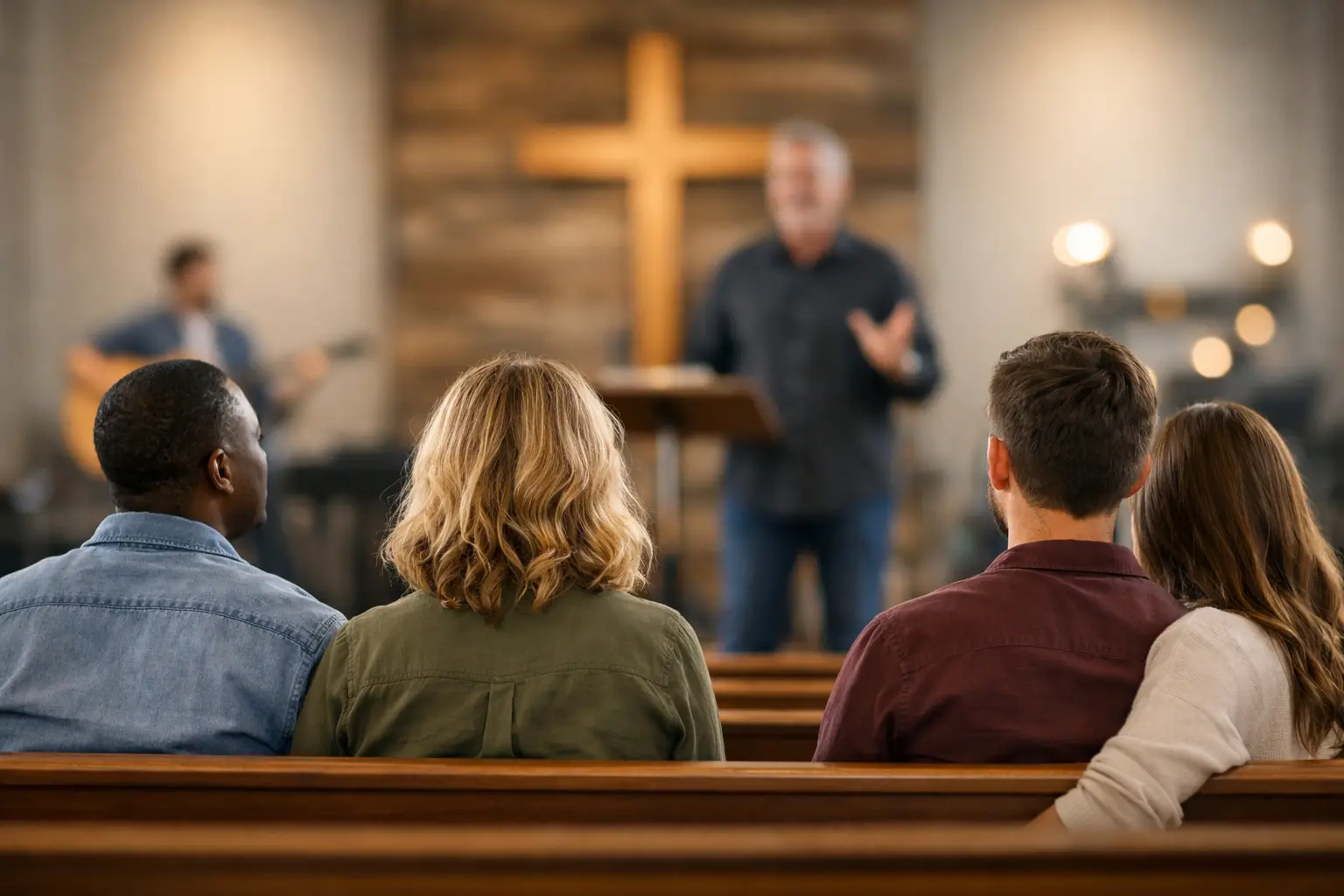
Finding people to talk about faith with should not feel harder than finding a new GP or a decent local coffee spot. Yet for many people, local Christian community can feel surprisingly out of reach. You may be new to the area, between churches, unsure where you fit, or simply tired of walking into rooms where everyone already seems to know each other. This guide to local Christian fellowship is for anyone looking for a more natural place to belong – one honest conversation at a time.
What local Christian fellowship can look like
Christian fellowship is more than attending the same service or being added to a group chat. It is the steady experience of being known, encouraged, challenged with kindness, and welcomed back when life gets messy.
In practice, it might look like six people around a kitchen table reading a short passage of Scripture. It could be a fortnightly café catch-up before work, a walk through the local park with a prayerful conversation, or an online gathering when distance and family commitments make meeting in person difficult. The setting matters less than the spirit of it: people making room for one another and keeping faith connected to everyday life.
A healthy group does not require everyone to have the same story, church background, or Bible knowledge. Mature Christians can bring wisdom and gentleness. New believers can bring fresh questions. Those who are curious about faith can bring honesty. Each person has something real to contribute when the group makes safety and respect a priority.
Begin with the kind of community you need
Before searching, take a quiet moment to name what you are hoping for. Are you looking for friendships after a move? A group that will help you read the Bible consistently? A place where you can ask big questions without feeling embarrassed? Perhaps you already attend church but want a smaller circle where people know what is happening in your week.
Clarity helps, but do not make your list so narrow that no real group could meet it. Fellowship is made of people, and people are imperfect. A group may not have your preferred meeting night, age range, or style of discussion, yet still become a meaningful place of connection.
It can help to decide on a few essentials. You may need a group that meets close to home, has a predictable rhythm, welcomes newcomers, or is comfortable with a mix of believers and faith-curious people. These are reasonable needs. Everything else can be held with an open hand at first.
Look for warmth before polish
Some groups are highly organised, with detailed study notes and a clear leader. Others are simple and conversational. Neither approach is automatically better. The key question is whether the structure serves the people in the room.
Pay attention to how newcomers are received. Are questions welcomed? Does one person dominate every discussion? Do people speak about others with care? Is there room to be honest without being put on the spot? A warm group can still have thoughtful biblical conversation. In fact, emotional safety often makes deeper conversation possible.
Where to find local Christian fellowship
Church small groups are a good starting point for many people, especially if you already attend a church where you feel comfortable. Ask whether there are groups for newcomers, mixed ages, young adults, parents, or people who meet outside Sunday services. If the first group you try is not the right fit, it is okay to ask about another option.
But church programmes are not the only path. Local neighbourhood groups, community noticeboards, Christian events, volunteer teams, and personal introductions can all lead to genuine fellowship. Some people find that a small gathering outside a formal church structure feels easier to enter, particularly if they are returning to faith or exploring Christianity for the first time.
Community-matching services can also reduce the awkwardness of starting from scratch. Bible Study Connect Group is built around this simple need: helping people meet in small local groups based on location, availability, and preferences, then offering light discussion support so the group can focus on real connection. The goal is not to replace church or pressure anyone into a particular mould. It is to make a first, welcoming conversation easier to find.
If there is little available in your suburb, widen the radius thoughtfully. A group 20 minutes away may be worthwhile if it meets consistently and feels like a genuine fit. On the other hand, a group five minutes away may be more sustainable during busy seasons. There is no perfect formula. Choose what you can realistically keep showing up for.
A simple way to try a group
The first visit can feel like a bigger deal than it is. You are not making a lifetime commitment by attending once. You are simply meeting people and noticing whether the space feels healthy.
Send a short message before you go. You could say that you are new to the area, interested in relaxed Bible discussion, or still figuring out where you belong. A thoughtful host will reply clearly about the time, location, length of the gathering, and what to expect. If those basics are vague or your questions are ignored, it is fair to keep looking.
When you arrive, let yourself be a guest. You do not need to impress anyone with Bible knowledge or have a polished testimony ready. Listen, share what feels comfortable, and notice how the group responds. A good gathering will not force personal disclosure, argue people into agreement, or treat curiosity as a problem to fix.
Give a promising group two or three meetings before deciding, unless there is a clear red flag. The first night may be a little awkward simply because everyone is new to one another. Trust is usually built through repetition: remembering someone’s work situation, checking in after a difficult week, and laughing together over ordinary life.
Questions worth asking
Before committing, ask how often the group meets and whether attendance is expected every time. Find out how discussions are led, whether participants take turns, and how the group handles different views. It is also reasonable to ask about practical boundaries, such as privacy, childcare, accessibility, transport, and whether people are welcome to bring a friend.
For faith-curious people, one question matters especially: can I ask honest questions here? The answer should be yes. Christian fellowship is not weakened by sincere questions about God, Scripture, doubt, suffering, or purpose. Faith grows in truthfulness, not performance.
How to help fellowship become lasting
The most meaningful groups are rarely built through one extraordinary night. They are built through small, repeated acts of care. Arriving when you said you would, sending a message when someone is unwell, and remembering to ask about something they shared all communicate, “You matter here.”
Consistency does not mean perfection. People have shift work, caring responsibilities, travel, illness, and seasons when they have very little to give. A healthy group makes room for that reality. It values showing up where possible without turning fellowship into another obligation to manage.
It also helps when the Bible stays connected to real life. Rather than treating a passage as a quiz, a group can ask: What stands out here? What feels difficult? What might this mean for the way we speak, work, forgive, or make decisions this week? Simple questions invite participation from people with different levels of experience.
Prayer can be just as gentle. Some people are comfortable praying aloud; others are not yet ready. A group can offer both freedom and invitation, perhaps by leaving a moment of quiet, inviting brief prayers, or letting one person close the gathering. No one should feel shamed for taking time.
When a group is not the right fit
Not every Christian group will be right for you, and leaving can be a wise decision rather than a failure. If you regularly feel judged, pressured, ignored, or unsafe, take that seriously. Fellowship should call people towards love and truth, not create fear or dependence on a particular leader.
Sometimes the issue is simply season or fit. A group of parents with toddlers may not suit someone with a changing work roster. A very structured study may not suit a person who is beginning with basic questions. You can thank the group for their welcome and continue your search without guilt.
The right local Christian fellowship may not feel instantly effortless. It may involve a few introductions, a slightly awkward first conversation, or trying more than one group. But belonging often begins before you feel fully ready. Bring your questions, your ordinary week, and your willingness to meet people where they are. There is room for that kind of beginning.