Blog

  • Home Bible Groups Versus Church Groups: Which Fits?

    Home Bible Groups Versus Church Groups: Which Fits?

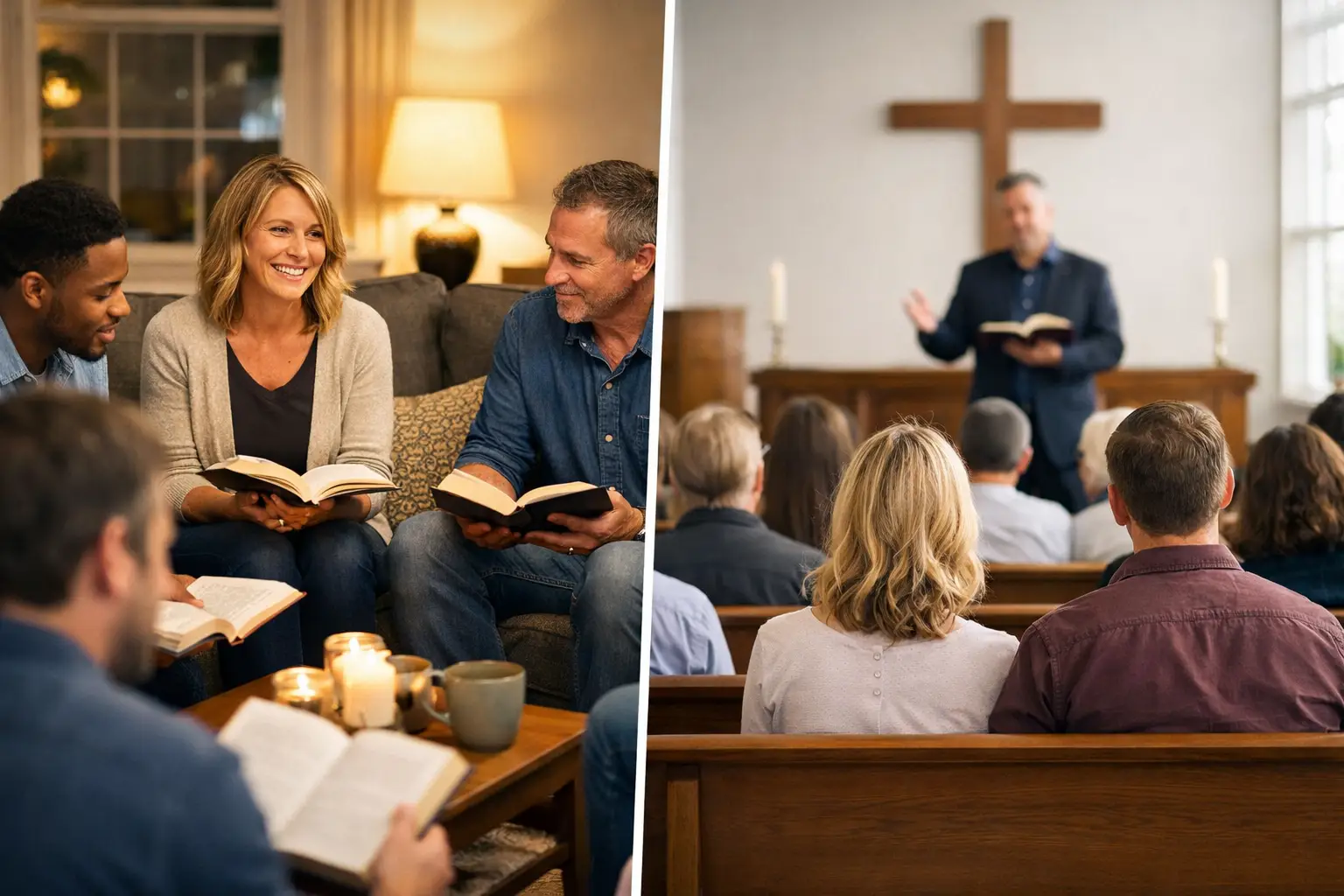
    A quiet lounge room, a few mugs on the table, and an open Bible can feel very different from a church hall full of familiar faces. Yet both settings can become places of genuine faith, friendship and growth. When people weigh up home bible groups versus church groups, they are often asking a deeper question: where can I be known, ask honest questions and keep showing up?

    There is no single right answer. The best setting depends on your season of life, personality, faith background and what kind of support you need. You may thrive in the clear rhythm of a church-based group, prefer the ease of meeting around someone’s kitchen table, or find that both have a place in your life.

    What people usually mean by each option

    A home Bible group is a small gathering that meets in someone’s home, or sometimes in a café, park or online. It may be connected to a church, but it does not have to be. The group is usually peer-led, conversational and relaxed. People read a passage, share what stands out, talk about real life and pray if that feels right for the group.

    A church group is typically organised through a local church. It might be called a small group, life group, connect group, growth group or Bible study. It often follows the church’s teaching calendar, uses a prepared study, and has recognised leaders who offer pastoral support and clear direction.

    Neither format tells you everything about the experience. A church group can be wonderfully personal and informal. A home group can be deeply committed, well prepared and spiritually grounded. What matters most is not the venue. It is whether the group creates a faithful, safe and consistent space for people to meet with God and one another.

    Home Bible groups versus church groups: the key differences

    Structure and flexibility

    Church groups often provide more structure from the beginning. There may be a set meeting night, a leader, a curriculum and a clear connection to Sunday teaching. For people who appreciate guidance, or who are new to studying Scripture, that structure can make it easier to participate. You do not have to work out every detail on your own.

    Home Bible groups are often more flexible. The group may choose its own time, place and pace. One week you might discuss a Gospel passage; another week, someone may bring a question about forgiveness, anxiety or purpose. This can make the group feel very natural, especially for people whose work, family or travel schedules do not fit a standard weekday programme.

    The trade-off is responsibility. Flexibility works best when a few people are willing to communicate, host occasionally and protect the group’s rhythm. Without a little shared ownership, a relaxed gathering can become an occasional catch-up rather than a consistent faith community.

    Belonging and ease of entry

    For many people, walking into an established church group can feel intimidating. You may wonder whether everyone already knows each other, whether you will understand the language people use, or whether your questions will sound out of place. A healthy church group will make room for newcomers, but joining can still require a bit of courage.

    A home-based group can lower that first barrier. Meeting in an ordinary setting often makes conversation less formal. You can arrive as you are, share only what you are comfortable sharing and get to know people at a human pace. This can be especially helpful for new residents, people returning to faith, or those who are spiritually curious but unsure about church.

    That said, familiarity is not automatic. A small home group can feel close-knit in a way that is comforting for some and harder for others to enter. Look for people who notice new faces, explain things plainly and do not treat a different opinion as a problem to fix.

    Teaching, care and accountability

    Church groups commonly have access to trained leaders, established teaching and wider pastoral care. If someone is going through grief, a relationship crisis or a significant spiritual struggle, a connected church community may have practical support and experienced people to walk alongside them. For some, that broader network is a real strength.

    Home Bible groups may not have the same formal support, but they can offer something equally meaningful: close attention. In a group of five to eight people, it is easier to notice when someone has gone quiet, remember an important appointment or follow up after a difficult week. Care becomes less like a programme and more like friendship.

    The healthiest groups understand their limits. Friends can pray, listen and encourage, but they should not pretend to have every answer. Good leaders know when a conversation needs wisdom from a pastor, counsellor or other qualified support.

    Relationships beyond the meeting

    Church groups can connect you to a larger community with services, volunteering, meals, events and people across generations. If you want a strong sense of belonging within a local church, joining one of its groups is often one of the best ways to move beyond being a face in the crowd.

    Home groups may be smaller, but that can lead to deeper everyday connection. The relationships have room to grow around the study itself: a walk after work, help with moving house, a message before an interview, or dinner when someone has had a rough week. Small does not mean shallow.

    Consider what you need right now. Are you looking for a wider church home, or are you longing for a few people who can know your actual week? Those desires are not in competition. Sometimes a home group offers the close circle that helps you feel ready to engage in a wider church community.

    How to recognise a healthy group in either setting

    The setting matters less than the culture. A healthy Bible group makes room for Scripture and for real people. The Bible should not be used as a weapon to win arguments, pressure people into disclosure or shut down sincere questions.

    You should be able to say, “I’m not sure what I think about that,” without being embarrassed. You should be free to listen before sharing. If prayer is part of the gathering, it should feel like an invitation, not a performance. Confidentiality matters too. Personal stories shared in the room should not become news for everyone else.

    Pay attention to whether the group is consistent without being controlling. A dependable gathering helps relationships form, but people also have jobs, children, illness and full seasons. Grace and commitment belong together.

    It is also wise to notice how leadership is handled. Healthy leaders guide rather than dominate. They welcome different levels of Bible knowledge, acknowledge difficult passages and keep pointing people towards Jesus rather than their own opinions.

    Choosing the right fit for this season

    If you want clear teaching, a connection to Sunday church life and access to pastoral care, a church-based group may be a strong fit. It can be a particularly helpful place if you are looking for a church home or want a clear pathway for growing in faith.

    If you are tired of feeling anonymous, have an unpredictable schedule, or want a more conversational starting point, a home Bible group may be a better next step. It can offer a low-pressure way to explore Scripture while building relationships slowly.

    You do not need to have your beliefs sorted before you attend. Curiosity is more than enough. A good group will not expect you to speak in polished spiritual answers or know where every book of the Bible is. It will simply welcome your presence and your honest questions.

    Bible Study Connect Group exists for people who want that kind of local, small-scale connection without the usual awkwardness of trying to find it alone. Matching people into manageable groups can make the first step feel less daunting, while leaving space for real conversations to develop over time.

    Before committing, consider visiting once or twice. Ask how the group chooses its studies, who leads, what happens when someone disagrees, and whether newcomers are welcome. These are not awkward questions. They are thoughtful ways to find a community where you can grow.

    The right group may not be the loudest, largest or most polished one. It may simply be the place where someone remembers your name, leaves room for your story and opens the Bible with you again next week.


  • A Guide to Conversational Faith Gatherings

    A Guide to Conversational Faith Gatherings

    The hardest part of a small faith gathering is rarely opening the Bible. It is walking through the door when you do not know anyone, wondering whether you will be expected to have the right answers, or worrying that a personal question might be met with judgement. A guide to conversational faith gatherings should begin there: with the human need to feel safe enough to be honest.

    A meaningful group does not need a polished leader, a perfect home, or a detailed curriculum. It needs a few people who are willing to listen, make room for different starting points, and return often enough for trust to grow. Whether you meet at a café, around a kitchen table, in a park, or online after work, the aim is simple: create a place where Scripture and real life can be discussed together.

    What conversational faith gatherings make possible

    Conversational faith gatherings are small, relaxed meetings where people explore the Bible, prayer, purpose, and everyday life through genuine discussion. They are not lectures with a few questions added at the end. Everyone has room to speak, and no one has to pretend they are further along in faith than they are.

    That distinction matters. A person who has read the Bible for years may need a place to say, “I am struggling to trust God with this.” Someone who has never opened it may need permission to ask, “What does this mean?” Both belong in the same conversation when the group is built on humility rather than performance.

    This approach also makes consistency more achievable. Large events can be encouraging, but relationships often deepen in a group of five to eight people who notice when you have had a difficult week, remember the details of your life, and make space for you to return as you are. Small groups cannot solve every need, and they should not replace professional support when someone is in crisis. But steady fellowship can make isolation feel less final.

    Begin with welcome, not expectations

    The first few minutes set the emotional temperature for the whole gathering. A warm welcome can be as practical as offering tea, explaining where to sit, and introducing people without putting anyone on the spot. If newcomers are present, say plainly that familiarity with the Bible is not required and that curiosity is more than enough.

    It helps to name the group’s purpose in one or two sentences. For example: “We are here to get to know one another, read a short passage, and talk honestly about how it connects with life.” This gives people clarity without making the evening feel formal.

    A few shared agreements protect the kind of conversation you want to have. Keep personal stories within the group. Let people finish their thoughts. Speak from your own experience rather than trying to fix someone else’s. Disagreement is welcome when it is respectful, but pressure is not. These are not rules designed to make people cautious. They make it easier to be real.

    Hospitality also means noticing the practical details. Choose a time that works for most people, begin and finish when you say you will, and avoid settings that are difficult to access or overly expensive. A simple gathering that happens regularly is usually more life-giving than an ambitious one that fades after three weeks.

    A guide to conversational faith gatherings: keep a simple rhythm

    A predictable rhythm frees people to focus on one another. There is no need to over-organise every minute. Most groups benefit from a structure that feels light but dependable: a chance to arrive and catch up, a short Bible passage, a few open questions, and a gentle close.

    Start with an easy check-in. Instead of asking everyone to share their whole story, try a question connected to ordinary life: “What has taken most of your energy this week?” or “What is one good thing you noticed recently?” People can answer briefly, and they can pass if they prefer. This helps the group move from small talk towards presence.

    Then read a manageable passage aloud, perhaps ten to fifteen verses. Reading it twice can be surprisingly helpful, especially when people have different levels of Bible familiarity. You do not need to explain every historical detail before anyone can respond. Begin with what people notice.

    Questions work best when they invite reflection rather than test knowledge. “What stands out to you?” is a helpful opening. Follow it with, “What feels encouraging, challenging, or confusing?” and then, “Where might this meet real life this week?” These questions leave room for a mature Christian to share wisdom and for a faith-curious guest to speak without fear of getting something wrong.

    If the conversation goes quiet, do not rush to fill the silence. Give people a moment to think. If one person begins teaching at length, thank them for their contribution and gently invite other voices in: “I would love to hear how others see it too.” Good facilitation is less about having the best answer and more about helping the room become a place of shared attention.

    Let Scripture shape the conversation without shutting it down

    A Christian gathering should be clear about its foundation. The Bible is not a decorative prop for a general chat. It is the source that draws the group back to Jesus, truth, grace, repentance, hope, and the way we live with one another.

    At the same time, Scripture-centred does not mean every response must sound certain or polished. The Psalms contain grief and confusion. The Gospels show people asking Jesus questions, misunderstanding him, and coming back again. Honest conversation is not a distraction from faith. Often, it is where faith becomes personal.

    There will be moments when people interpret a passage differently or bring questions the group cannot settle in one evening. Resist the urge to force quick agreement. You can say, “That is worth sitting with,” or “Let’s come back to the passage and see what we can say with confidence.” If a topic needs deeper pastoral care or theological guidance, acknowledge that graciously. A small group can hold a question without pretending to carry every answer.

    Make room for different stories and seasons

    People arrive carrying different experiences of church, family, doubt, and loss. Some may be rebuilding faith after a painful season. Others may be new to a suburb, working irregular hours, or simply tired of trying to make friends as an adult. A group becomes welcoming when it does not treat these differences as problems to solve.

    Avoid insider language when a clearer phrase will do. Rather than assuming everyone understands a reference, briefly explain it. Rather than asking someone to pray aloud without warning, offer the opportunity and make passing completely normal. These small choices communicate, “You are welcome here before you know how anything works.”

    It is also wise to distinguish between care and rescue. If someone shares something heavy, listen with compassion, thank them for trusting the group, and ask what support would feel helpful. Sometimes that may mean prayer and a follow-up message. At other times, it may mean encouraging them to speak with a pastor, counsellor, doctor, or emergency service. Loving community includes knowing its limits.

    Build consistency through small, practical choices

    Trust rarely comes from one exceptional gathering. It comes from people showing up again. Before you finish each meeting, agree on the next time, place, and passage. Send a brief reminder on the day. If someone misses a week, a simple message saying they were missed can make returning much easier.

    Shared leadership helps too. One person can welcome, another can read the passage, and someone else can keep an eye on the time. Rotating these small roles prevents the group from depending on a single confident personality. It also reminds everyone that belonging includes contribution, even when that contribution is as simple as bringing biscuits or asking a thoughtful question.

    Not every group will become deeply connected straight away. Personalities, schedules, group size, and life stages all affect the rhythm. Give a new gathering a little time, then ask honestly: Are people being heard? Is the conversation grounded in Scripture? Does this time feel sustainable? Adjust what needs adjusting, but do not mistake an imperfect beginning for failure.

    The next meaningful conversation may start with a passage, a cuppa, and a question asked without pressure. Make the invitation simple. Keep a chair open. When people find a place where they can be known and still be welcomed, they are far more likely to return – and to offer that same welcome to someone else.

  • How a Peer Led Bible Study Builds Belonging

    How a Peer Led Bible Study Builds Belonging

    A peer-led Bible study can begin with something very ordinary: a few people around a kitchen table, coffee cooling beside open Bibles, and one person admitting they are not sure what a passage means. That honesty is not a problem to fix. It is often where real community begins.

    For many people, finding spiritual connection feels harder than it should. You may be new to an area, between churches, carrying a busy schedule, or simply tired of walking into a room where everyone seems to know each other already. A small, relaxed group creates space to be known without requiring you to have all the answers. You are welcome whether you have read the Bible for years or are opening it for the first time.

    What makes a peer-led Bible study different?

    A peer-led group is not built around one expert teaching everyone else. Participants share responsibility for the conversation, prayer and practical care of the group. One person might choose the passage for the week, another might ask the opening question, and someone else may remember to check in on a member who has had a difficult week.

    That does not mean the group has no direction. Scripture remains at the centre, and a little structure helps everyone feel included. But the atmosphere is more conversational than classroom-like. Rather than trying to produce the perfect answer, people listen, reflect and consider what God may be saying through the passage and through one another.

    This approach can be especially life-giving for people who have felt overlooked or hesitant in more formal settings. A new Christian can ask a basic question without embarrassment. A mature believer can share wisdom without taking over. Someone who is curious about faith can join the conversation without pretending to be further along than they are.

    There is a trade-off, of course. A peer-led Bible study may not offer the detailed teaching of a trained pastor or a structured course. If your group wants to work through complex theological questions, it can be wise to seek trusted resources, speak with a local church leader or invite informed guidance when needed. Peer leadership works best when it is humble enough to say, “Let’s look into that together.”

    Start with a simple shared purpose

    The healthiest groups do not need an elaborate mission statement, but they do need clarity. At your first gathering, name why you are meeting. It could be to read Scripture, grow in friendship, pray honestly and encourage one another to live out faith in everyday life.

    This is also the right time to agree on a few expectations. Keep them warm and practical rather than overly formal. What is shared in the group should stay in the group, unless someone is at risk of harm. Give everyone room to speak, but do not pressure anyone to share personal details. Aim to listen before responding, and allow people to disagree thoughtfully without turning the evening into a debate.

    A sense of emotional safety does not happen by accident. It grows when people experience consistency. If the group says newcomers are welcome, greet them properly. If someone misses a week, send a simple message. If a person shares a struggle, avoid rushing to advice. Sometimes the most faithful response is, “Thank you for trusting us with that. How can we support you?”

    Keep the meeting easy to return to

    A sustainable peer-led group does not need to feel like another appointment to manage. Meetings of about 60 to 90 minutes are often enough. You might meet in a home, at a quiet café, in a park when the weather is kind, or online when distance makes gathering difficult.

    A straightforward rhythm helps. Begin with a brief check-in: what has been good, hard or on your mind this week? Read a short Bible passage aloud, perhaps twice with a moment of silence in between. Then talk through a few open questions. Finish by sharing prayer needs and praying in a way that feels comfortable for those present.

    Good questions are simple enough for anyone to answer, yet meaningful enough to take people beyond surface-level discussion. Try asking: What stands out to you? What does this passage show us about God or people? Where does this connect with real life this week? Is there something we want to pray about or practise?

    It is usually better to stay with a short passage than rush through a whole chapter. Reading less and noticing more gives quieter members time to think. It also makes room for the kind of conversation that connects Scripture with work, family, loneliness, hope, doubt and the small decisions that shape a week.

    Share leadership without making it awkward

    You do not need to appoint a permanent leader just because someone has a larger dining table. Rotating small responsibilities keeps the group from depending on one person and helps everyone see that they have something to contribute.

    One person can welcome people at the door or online. Another can bring a discussion prompt. Someone can keep an eye on the time so prayer is not squeezed into the final two minutes. These are modest roles, but they make a gathering feel cared for.

    At the same time, shared leadership is not a demand for equal confidence. Some people are naturally comfortable facilitating; others may prefer to listen, make tea or send the follow-up message. Let participation grow at a gentle pace. The goal is not to make everybody perform. It is to build a group where people can serve from their real strengths.

    If a conversation becomes dominated by one person, a facilitator can kindly widen the circle: “Thank you for sharing. I would love to hear from someone who has not had a chance yet.” If the discussion drifts far from the passage, bring it back without scolding anyone. A simple, “What might these verses add to that?” can refocus the room.

    Make room for different faith backgrounds

    A local Bible study can include people at very different places in their faith. That variety is a gift when it is handled with care. Avoid insider language where possible, or take a moment to explain it. Do not assume everyone knows the story behind a verse, what prayer sounds like, or where to find a book of the Bible.

    For spiritually curious guests, respect matters deeply. They should never feel like a project or be pushed to give a response they are not ready to give. Christians can speak clearly and sincerely about their faith while still making room for genuine questions. Curiosity is more than enough to begin.

    For committed believers, this kind of group can be a reminder that faith is not only formed through receiving information. It is also formed through hospitality, patience, confession, encouragement and the quiet practice of showing up for one another.

    When the group needs more support

    Small groups are not equipped to carry every situation alone. If someone shares that they are unsafe, experiencing abuse, facing a serious mental health crisis or at risk of harming themselves, respond with care and seek appropriate professional or emergency support. Prayer and friendship matter, but they are not substitutes for specialised help.

    Other challenges are more ordinary. Attendance may dip during busy seasons. Personalities may clash. A group may outgrow a living room or become too large for everyone to speak. These are not signs of failure. They are prompts to adjust: change the meeting time, split into two groups, revisit expectations or take a short break and begin again.

    Bible Study Connect Group exists for people who want a simpler path into this kind of consistent, local community. The aim is not to create another programme to keep up with, but to help people meet, belong and read Scripture together in a setting that feels natural.

    A good group is rarely perfect. Someone will forget the snacks, a question may sit unanswered, and a week may feel quieter than usual. Keep showing up anyway. Over time, shared cups of tea, honest prayer and a passage read together can become the steady place where faith and friendship take root.

  • Belonging After Church Burnout Can Be Gentle

    Belonging After Church Burnout Can Be Gentle

    Church burnout is not always caused by a loss of faith. Sometimes it comes after years of carrying too much: serving every week, managing conflict, feeling unseen, or being expected to stay cheerful when life is hard. If that is part of your story, belonging after church burnout may feel less like a hopeful promise and more like a risk.

    You might miss singing with others, sharing a meal after a gathering, or having people who understand the language of faith. At the same time, the thought of walking into another organised setting can make your shoulders tighten. Both things can be true. Wanting community does not mean you are ready for the kind of community that hurt or exhausted you.

    Why church burnout can make connection difficult

    Burnout can change the way you read people and places. A friendly invitation may feel like a hidden request for commitment. A Bible study may sound like another role to fill. Even simple questions such as “Where do you go to church?” can carry more weight than they once did.

    This response is not a spiritual failure. It is often your mind and body asking for safety, clarity and rest. Some people need distance from formal church structures for a season. Others still attend a service but feel unable to join another team, programme or leadership pathway. There is no single timetable for recovery.

    It also helps to name what happened honestly. Burnout can grow from overwork and poor boundaries, but it can also follow disappointment, controlling leadership, unresolved conflict, exclusion or spiritual pressure. These experiences are not all the same, and they should not be treated as though they are. If you have experienced abuse or coercion, professional support and a trusted, trauma-informed counsellor may be an important part of healing.

    Belonging after church burnout starts smaller than you think

    When church has felt demanding, a large gathering can be too much too soon. A gentler first step may be one safe conversation over coffee, a walk with someone who will not rush to fix you, or a small group where you can simply listen at first.

    Real belonging is not built by proving your usefulness. It grows when people make room for your actual life: your questions, fatigue, doubts, hope and limits. You do not need to arrive with a polished testimony or an explanation for why you have been away. “I am taking things slowly” is a complete sentence.

    Small, consistent gatherings can be especially helpful because they make it easier to notice character over time. Is there space for different views? Do people respect a no? Can someone share a hard week without becoming a project? Are leaders and hosts willing to admit they do not have all the answers? These quiet details matter more than a warm welcome on the first night.

    Look for safety, not perfection

    No group will be flawless. People are still people, even around an open Bible and a shared table. The aim is not to find a community that never disappoints you. It is to find one where care, accountability and repair are normal when disappointment happens.

    A healthy group does not demand instant trust. It lets trust develop at a human pace. It does not pressure you to disclose deeply personal details, take on a role, agree with every interpretation or make promises you are not ready to make. Curiosity is more than enough.

    Pay attention to how people respond when someone disagrees, arrives late, misses a week or says they need a break. A group that honours people in small moments is more likely to be safe in significant ones.

    Let boundaries protect your healing

    Boundaries are not barriers against Christian community. They can be the way you return to it with honesty. They help you stay connected without repeating patterns that left you depleted.

    You may decide to attend only twice a month, avoid leadership for a while, leave by a certain time, or keep some parts of your story private until trust has grown. You might prefer a group that meets in a home, café, park or online rather than a church building. These choices are not selfish. They are practical ways of caring for your capacity.

    It can also be wise to notice the difference between a gentle invitation and persistent pressure. “We would love to see you when you are ready” leaves room to choose. “We really need you” may sound caring, but it can pull you back into the belief that your value depends on what you provide.

    Your yes should be freely given. So should your no.

    Reconnect with faith without performing it

    For many people, church burnout tangles faith with performance. Prayer can feel like another task. Scripture can bring up memories of being corrected or judged. Even language that once felt familiar may now feel heavy.

    There is room to begin again quietly. Read a short passage without trying to produce a lesson from it. Sit with a Psalm that gives words to weariness. Ask God one honest question. Notice what brings peace rather than panic. Faith is not only expressed through attendance, volunteering or certainty. It can also be expressed through rest, truthfulness and a willingness to remain open.

    A conversational Bible study can offer a different experience from a formal class. The right setting will make space for mature Christians, people returning after a long break and those who are simply exploring. Rather than treating questions as threats, it can hold them with respect. Scripture is still taken seriously, but nobody has to pretend they have it all sorted.

    Bible Study Connect Group exists for this kind of low-pressure connection: small local groups where people can meet, talk honestly and explore faith at a sustainable pace. The goal is not to replace a church or push anyone into a mould. It is to reduce the awkwardness of finding people and make consistent fellowship more possible.

    Give new community time to become real

    Early connection can feel awkward, especially if your previous community was once your whole world. You may compare every new person with people you miss, or expect warning signs around every corner. Try not to force a verdict after one meeting.

    At the same time, do not ignore what you notice. Give relationships enough time for steadiness to appear, while trusting your instincts if a group repeatedly dismisses your boundaries or makes you feel smaller. Healing rarely means becoming less discerning. It means learning that discernment and hope can live together.

    Belonging often returns through ordinary repetition: the same few faces, a shared laugh, someone remembering what happened at work, a message when you have been quiet. These moments may seem small, but they rebuild a truth burnout can damage: you can be known without being used.

    You are welcome to take the next step slowly. Find one setting where you do not have to earn a seat, let one trustworthy person know where you are, and allow grace to be practical. A gentle place to belong may not erase what happened, but it can help you remember that faith and community were never meant to cost you your whole self.

  • Structured Studies vs Conversation Groups

    Structured Studies vs Conversation Groups

    Some people walk into a Bible group hoping for clear teaching, a set passage, and questions that keep everyone on track. Others are looking for honest conversation, room to ask awkward questions, and a place where they can talk about life as it really is. When it comes to structured studies vs conversation groups, the better option is not always the more polished one. Often, it is the one that helps real people keep showing up.

    That matters more than many of us admit. A group can have strong content and still feel hard to enter. It can also feel warm and open, yet drift so much that nobody leaves grounded in Scripture. If you are trying to find a Bible study that actually fits your season, it helps to understand what each format does well, where each one can struggle, and why a lighter-touch approach often serves more people than expected.

    Structured studies vs conversation groups: what is the difference?

    A structured study usually follows a clear plan. That might mean working through a book of the Bible in sequence, using prepared notes, following a study guide, or having one person facilitate with a defined set of questions. There is usually a shared goal and a visible path from week one to week six or ten.

    Conversation groups are different. They still need care and intention, but they lean more on relational discussion than formal teaching. People gather, read a passage or reflect on a prompt, and talk honestly about faith, doubt, relationships, prayer, habits, and what Scripture might mean in everyday life. The aim is often less about finishing a program and more about building a steady rhythm of trust, openness, and spiritual encouragement.

    Neither format is automatically better. Each one serves a different need, and many people need both at different times.

    What structured studies do well

    Structured studies are often helpful for people who want clarity. If you are new to reading the Bible, a guided format can remove guesswork. You know what to read, what the topic is, and where the discussion is heading. That can lower anxiety, especially for people who worry they do not know enough to contribute.

    They can also create momentum. A clear framework helps a group stay focused and avoid spending the whole evening chatting without engaging deeply with Scripture. For mature believers, that can be especially valuable. There is a sense of moving somewhere together rather than circling the same few topics.

    Another strength is consistency. A structured study can keep the group anchored even when different personalities are in the room. If one person talks too much or another is hesitant, the guide itself can help hold the shape of the gathering.

    Still, structure has trade-offs. For some people, it feels safe. For others, it feels like pressure.

    Where structured studies can feel hard

    A formal study can unintentionally raise the social bar. If someone has never joined a Bible group before, arriving late to a six-week study where everyone already has the workbook can feel like turning up to class without the right materials. Even if nobody says that out loud, people feel it.

    Structured settings can also make spiritually curious people cautious. If someone is exploring faith and carrying real questions, they may not be ready for a format that feels like they are meant to keep up or arrive with the right answers. They may want to talk before they are ready to study in a traditional sense.

    There is also the risk of over-directing the room. When every question has a planned outcome, people can start editing themselves. Honest conversation gets replaced by “what am I supposed to say here?” That does not always happen, but it happens enough to matter.

    Why conversation groups often feel more welcoming

    Conversation groups make it easier to begin. That is one of their greatest strengths. A person can come as they are, without needing prior Bible knowledge, a polished testimony, or confidence in group settings. Curiosity is enough.

    This format tends to feel more human because it starts with relationship. People are not just discussing a passage in the abstract. They are talking about how Scripture meets stress, grief, work, friendship, forgiveness, loneliness, and hope. For many adults, especially those outside established church systems, that kind of space feels far more accessible.

    Conversation groups also help people build belonging before expectation. That order matters. When people feel emotionally safe, they are more likely to speak honestly, ask thoughtful questions, and return the following week. Consistency grows when people are not managing the pressure of performance.

    For local, peer-led groups meeting in homes, cafés, parks or online, this style can be especially sustainable. It does not rely on one expert teacher carrying the room. It gives ordinary people permission to show up, listen well, and grow together.

    Where conversation groups need care

    Of course, openness on its own is not enough. A conversation group without any guidance can drift quickly. One week becomes mostly catch-up. Another week turns into one person sharing opinions without much reference to Scripture. Warmth matters, but so does direction.

    That is why the real comparison is not between rigid structure and no structure at all. The healthiest groups usually live somewhere in the middle. They have enough shape to stay grounded and enough flexibility to stay relational.

    A simple passage, a few thoughtful prompts, and a consistent meeting rhythm can do a lot of good. That kind of light structure protects the conversation without making it feel forced. It keeps the door open for newcomers while still helping the group engage meaningfully with the Bible.

    Choosing the right format for your season

    If you are deciding between structured studies vs conversation groups, start with honesty rather than idealism. Ask what kind of environment will actually help you stay engaged.

    If you are craving depth, discipline, and a clearer learning path, a structured study may be right for this season. If you have been feeling isolated, uncertain, new to faith, new to an area, or simply tired of overly formal settings, a conversation-based group may be the better fit.

    It also depends on your barriers. Some people are not avoiding Bible study because they dislike Scripture. They are avoiding the awkwardness of entering a pre-formed group, the pressure of saying the right thing, or the difficulty of finding a gathering that feels natural. In those cases, the format matters because it either lowers friction or adds to it.

    A good question to ask is this: will this group help me participate honestly, or just attend quietly? The answer tells you a lot.

    The strongest groups usually blend both

    This is where many people find relief. You do not have to choose between depth and warmth, or between Scripture and conversation. A healthy Bible group can hold both.

    In practice, that might look like a small group that meets regularly, opens a passage together, uses a few prompts to keep things moving, and leaves room for real discussion. It is not a lecture. It is not random either. There is enough structure to create steadiness, and enough openness to let people breathe.

    That balance serves a wide range of people well. Mature Christians can still engage Scripture thoughtfully. Newcomers can ask basic questions without embarrassment. Faith-curious guests can listen, contribute, and explore without feeling cornered. Everyone knows they are welcome here.

    That is one reason platforms like Bible Study Connect Group focus on simple, sustainable gatherings rather than heavy programs. For many people, what keeps a group going is not a perfect curriculum. It is a manageable rhythm, a safe atmosphere, and the kind of conversation that makes people want to come back.

    What to look for in a group before you join

    Before joining any Bible group, pay attention to more than the topic. Notice whether the environment feels hospitable. Can new people enter without feeling behind? Is there enough guidance to stay grounded, but not so much that the room feels stiff? Do people listen to each other, or just wait to speak?

    It is also worth noticing whether the group expects instant vulnerability. Healthy groups make space for trust to grow over time. They do not demand openness before safety has been built.

    And if you are someone who has felt overlooked by traditional small-group systems, that does not mean community is not for you. It may simply mean you need a format that meets you with more warmth, clarity, and realism.

    The best Bible group is rarely the one that looks most impressive from the outside. It is the one that helps ordinary people gather consistently, open Scripture honestly, and care for one another in a way that can last. If that is what you are looking for, do not underestimate the quiet strength of a conversation-shaped group with just enough structure to hold it together.