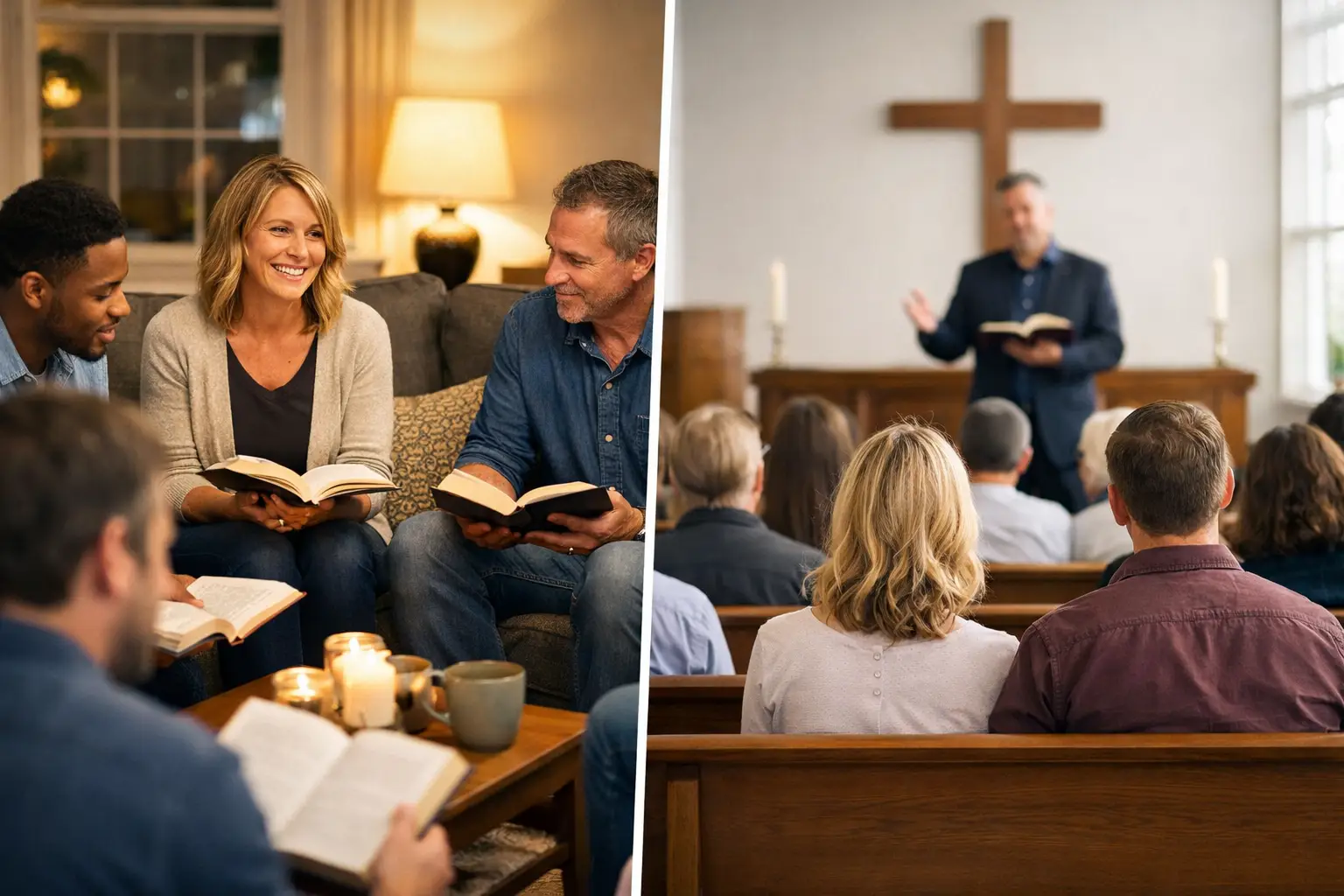
A quiet lounge room, a few mugs on the table, and an open Bible can feel very different from a church hall full of familiar faces. Yet both settings can become places of genuine faith, friendship and growth. When people weigh up home bible groups versus church groups, they are often asking a deeper question: where can I be known, ask honest questions and keep showing up?
There is no single right answer. The best setting depends on your season of life, personality, faith background and what kind of support you need. You may thrive in the clear rhythm of a church-based group, prefer the ease of meeting around someone’s kitchen table, or find that both have a place in your life.
What people usually mean by each option
A home Bible group is a small gathering that meets in someone’s home, or sometimes in a café, park or online. It may be connected to a church, but it does not have to be. The group is usually peer-led, conversational and relaxed. People read a passage, share what stands out, talk about real life and pray if that feels right for the group.
A church group is typically organised through a local church. It might be called a small group, life group, connect group, growth group or Bible study. It often follows the church’s teaching calendar, uses a prepared study, and has recognised leaders who offer pastoral support and clear direction.
Neither format tells you everything about the experience. A church group can be wonderfully personal and informal. A home group can be deeply committed, well prepared and spiritually grounded. What matters most is not the venue. It is whether the group creates a faithful, safe and consistent space for people to meet with God and one another.
Home Bible groups versus church groups: the key differences
Structure and flexibility
Church groups often provide more structure from the beginning. There may be a set meeting night, a leader, a curriculum and a clear connection to Sunday teaching. For people who appreciate guidance, or who are new to studying Scripture, that structure can make it easier to participate. You do not have to work out every detail on your own.
Home Bible groups are often more flexible. The group may choose its own time, place and pace. One week you might discuss a Gospel passage; another week, someone may bring a question about forgiveness, anxiety or purpose. This can make the group feel very natural, especially for people whose work, family or travel schedules do not fit a standard weekday programme.
The trade-off is responsibility. Flexibility works best when a few people are willing to communicate, host occasionally and protect the group’s rhythm. Without a little shared ownership, a relaxed gathering can become an occasional catch-up rather than a consistent faith community.
Belonging and ease of entry
For many people, walking into an established church group can feel intimidating. You may wonder whether everyone already knows each other, whether you will understand the language people use, or whether your questions will sound out of place. A healthy church group will make room for newcomers, but joining can still require a bit of courage.
A home-based group can lower that first barrier. Meeting in an ordinary setting often makes conversation less formal. You can arrive as you are, share only what you are comfortable sharing and get to know people at a human pace. This can be especially helpful for new residents, people returning to faith, or those who are spiritually curious but unsure about church.
That said, familiarity is not automatic. A small home group can feel close-knit in a way that is comforting for some and harder for others to enter. Look for people who notice new faces, explain things plainly and do not treat a different opinion as a problem to fix.
Teaching, care and accountability
Church groups commonly have access to trained leaders, established teaching and wider pastoral care. If someone is going through grief, a relationship crisis or a significant spiritual struggle, a connected church community may have practical support and experienced people to walk alongside them. For some, that broader network is a real strength.
Home Bible groups may not have the same formal support, but they can offer something equally meaningful: close attention. In a group of five to eight people, it is easier to notice when someone has gone quiet, remember an important appointment or follow up after a difficult week. Care becomes less like a programme and more like friendship.
The healthiest groups understand their limits. Friends can pray, listen and encourage, but they should not pretend to have every answer. Good leaders know when a conversation needs wisdom from a pastor, counsellor or other qualified support.
Relationships beyond the meeting
Church groups can connect you to a larger community with services, volunteering, meals, events and people across generations. If you want a strong sense of belonging within a local church, joining one of its groups is often one of the best ways to move beyond being a face in the crowd.
Home groups may be smaller, but that can lead to deeper everyday connection. The relationships have room to grow around the study itself: a walk after work, help with moving house, a message before an interview, or dinner when someone has had a rough week. Small does not mean shallow.
Consider what you need right now. Are you looking for a wider church home, or are you longing for a few people who can know your actual week? Those desires are not in competition. Sometimes a home group offers the close circle that helps you feel ready to engage in a wider church community.
How to recognise a healthy group in either setting
The setting matters less than the culture. A healthy Bible group makes room for Scripture and for real people. The Bible should not be used as a weapon to win arguments, pressure people into disclosure or shut down sincere questions.
You should be able to say, “I’m not sure what I think about that,” without being embarrassed. You should be free to listen before sharing. If prayer is part of the gathering, it should feel like an invitation, not a performance. Confidentiality matters too. Personal stories shared in the room should not become news for everyone else.
Pay attention to whether the group is consistent without being controlling. A dependable gathering helps relationships form, but people also have jobs, children, illness and full seasons. Grace and commitment belong together.
It is also wise to notice how leadership is handled. Healthy leaders guide rather than dominate. They welcome different levels of Bible knowledge, acknowledge difficult passages and keep pointing people towards Jesus rather than their own opinions.
Choosing the right fit for this season
If you want clear teaching, a connection to Sunday church life and access to pastoral care, a church-based group may be a strong fit. It can be a particularly helpful place if you are looking for a church home or want a clear pathway for growing in faith.
If you are tired of feeling anonymous, have an unpredictable schedule, or want a more conversational starting point, a home Bible group may be a better next step. It can offer a low-pressure way to explore Scripture while building relationships slowly.
You do not need to have your beliefs sorted before you attend. Curiosity is more than enough. A good group will not expect you to speak in polished spiritual answers or know where every book of the Bible is. It will simply welcome your presence and your honest questions.
Bible Study Connect Group exists for people who want that kind of local, small-scale connection without the usual awkwardness of trying to find it alone. Matching people into manageable groups can make the first step feel less daunting, while leaving space for real conversations to develop over time.
Before committing, consider visiting once or twice. Ask how the group chooses its studies, who leads, what happens when someone disagrees, and whether newcomers are welcome. These are not awkward questions. They are thoughtful ways to find a community where you can grow.
The right group may not be the loudest, largest or most polished one. It may simply be the place where someone remembers your name, leaves room for your story and opens the Bible with you again next week.
Leave a Reply